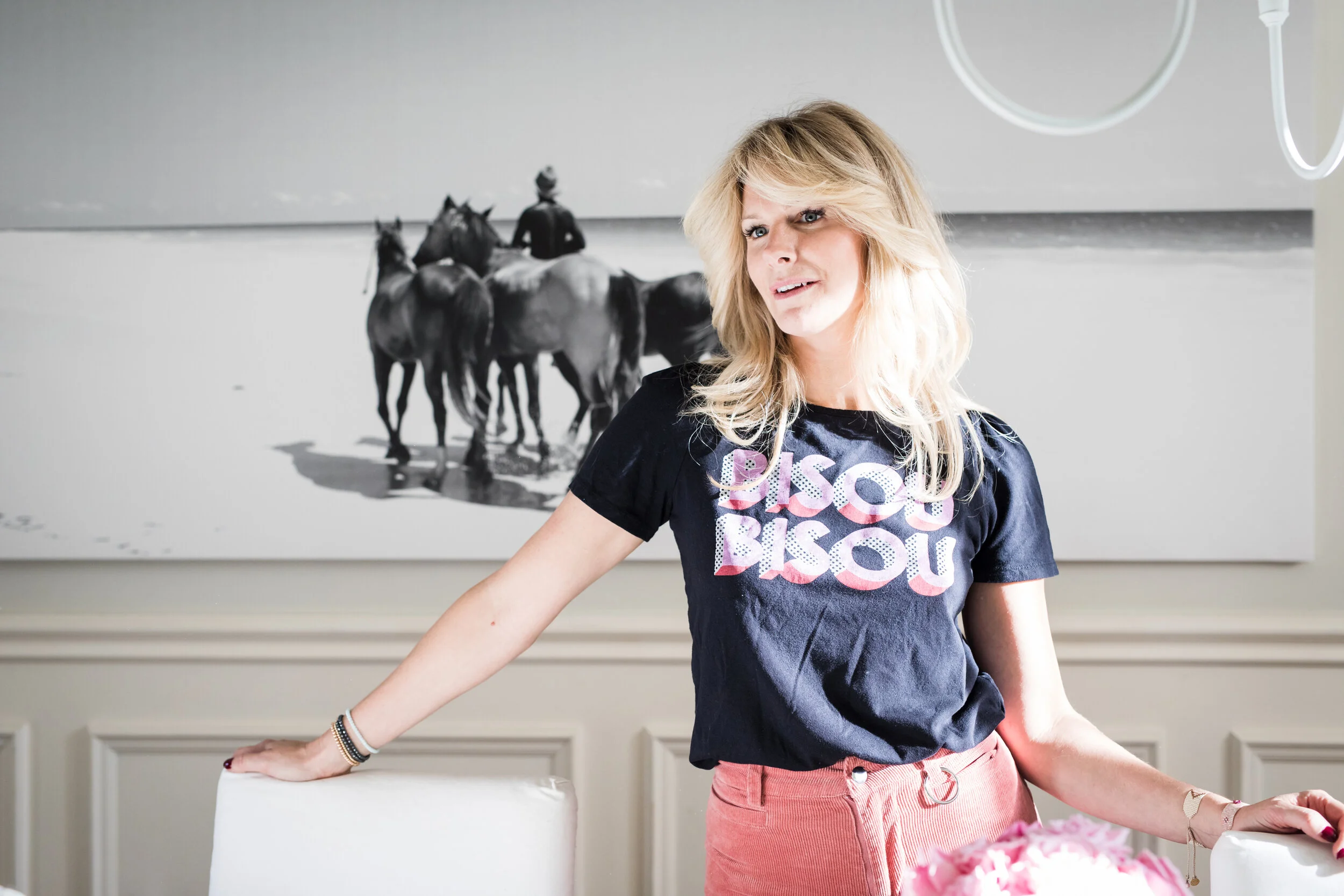
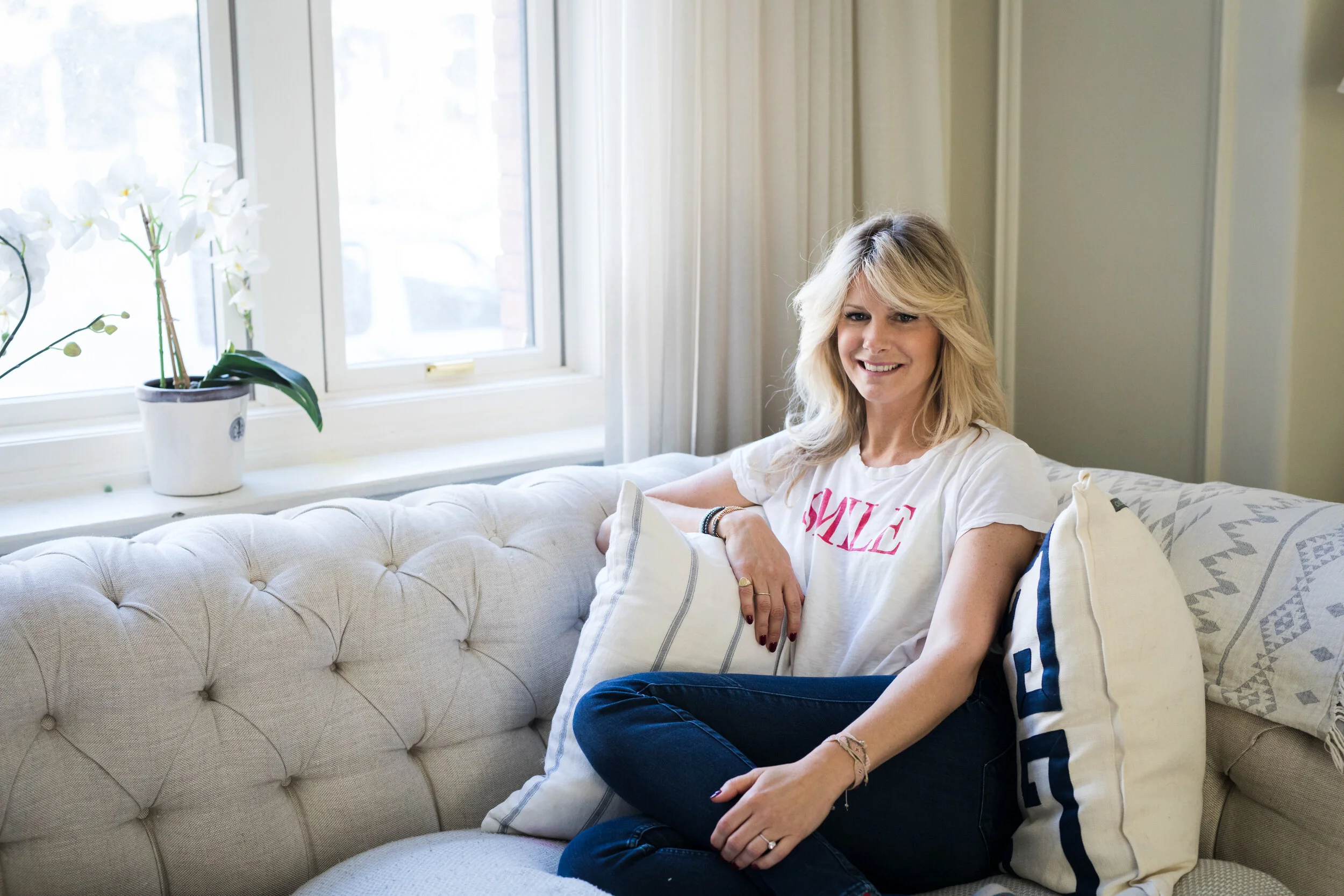
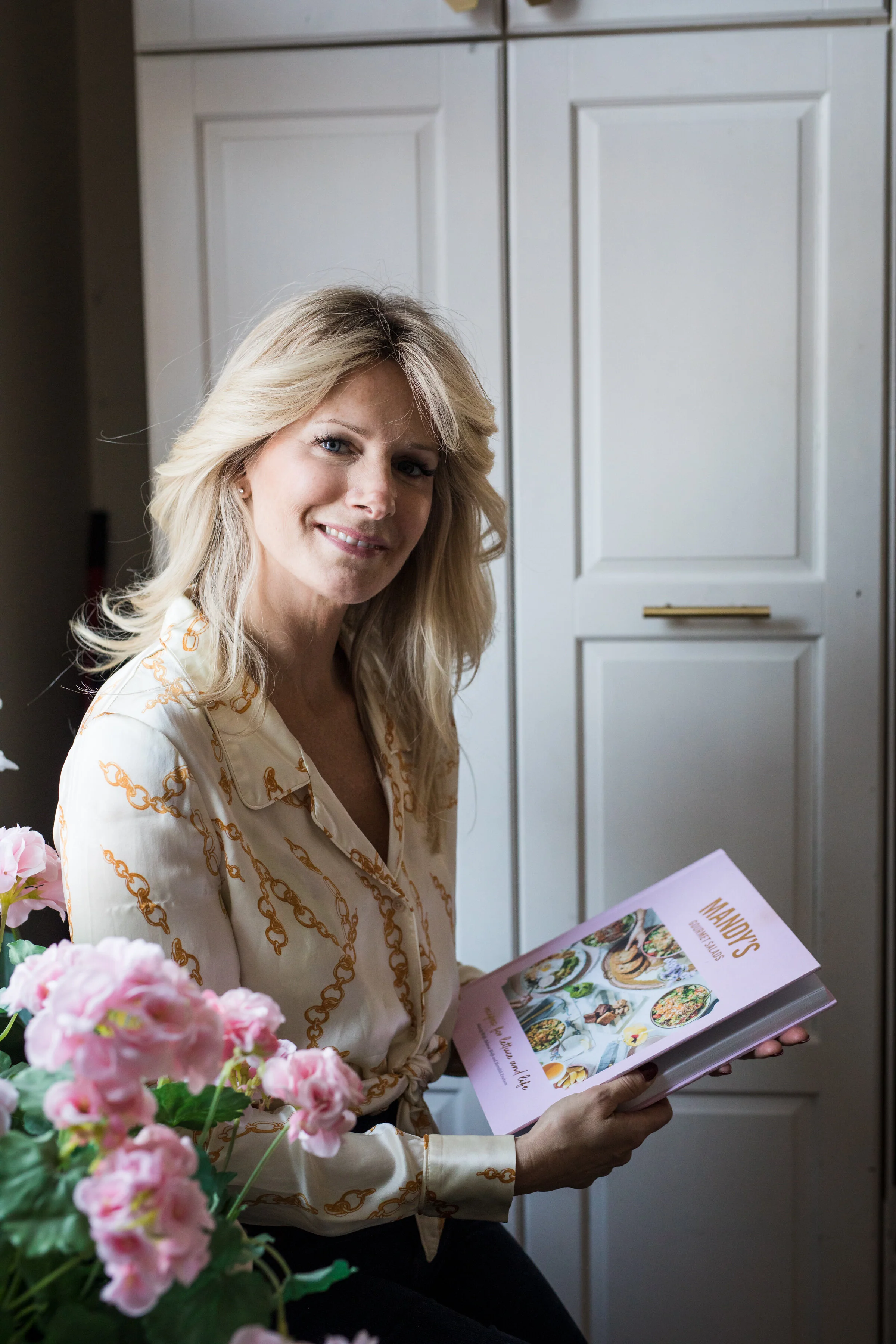
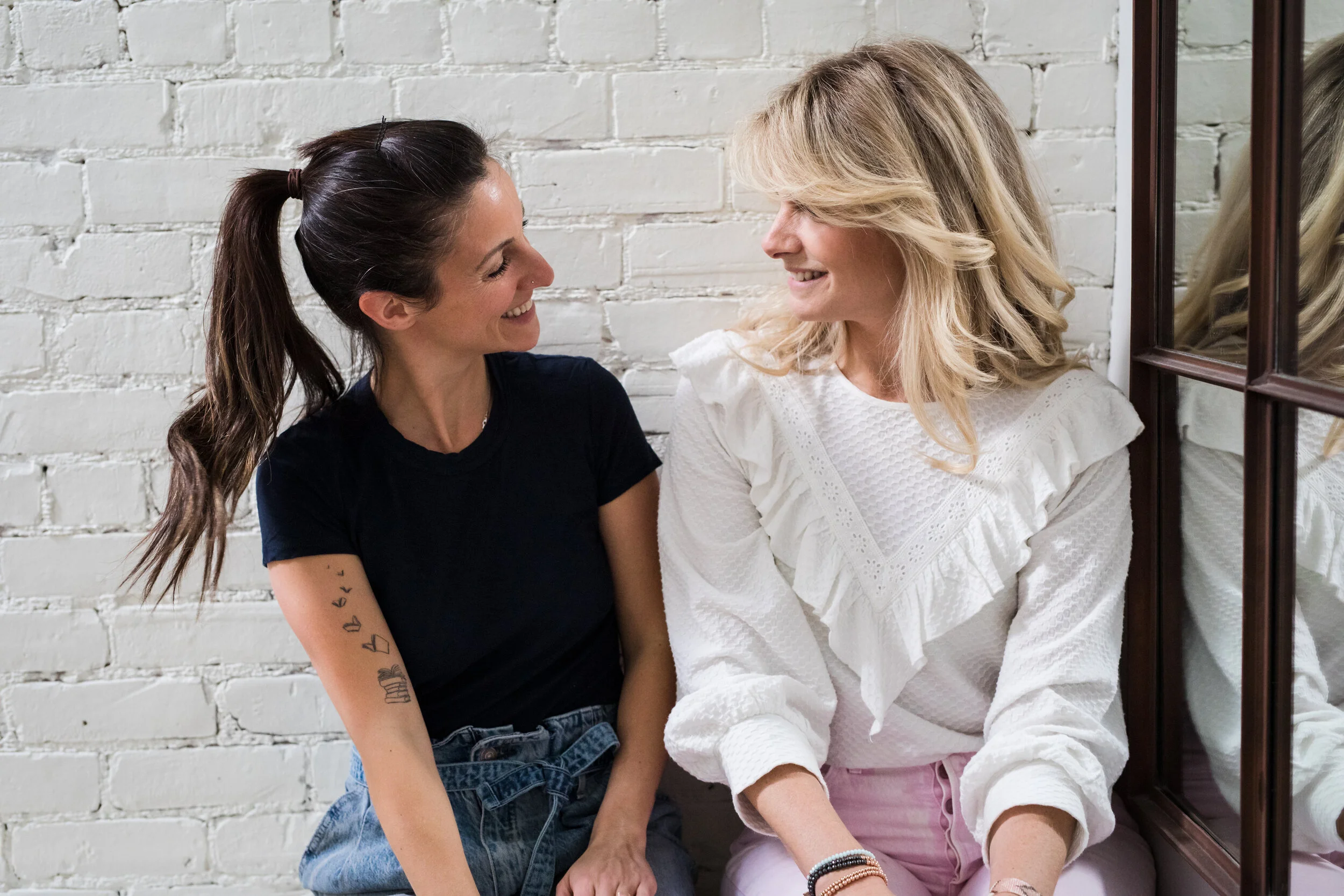
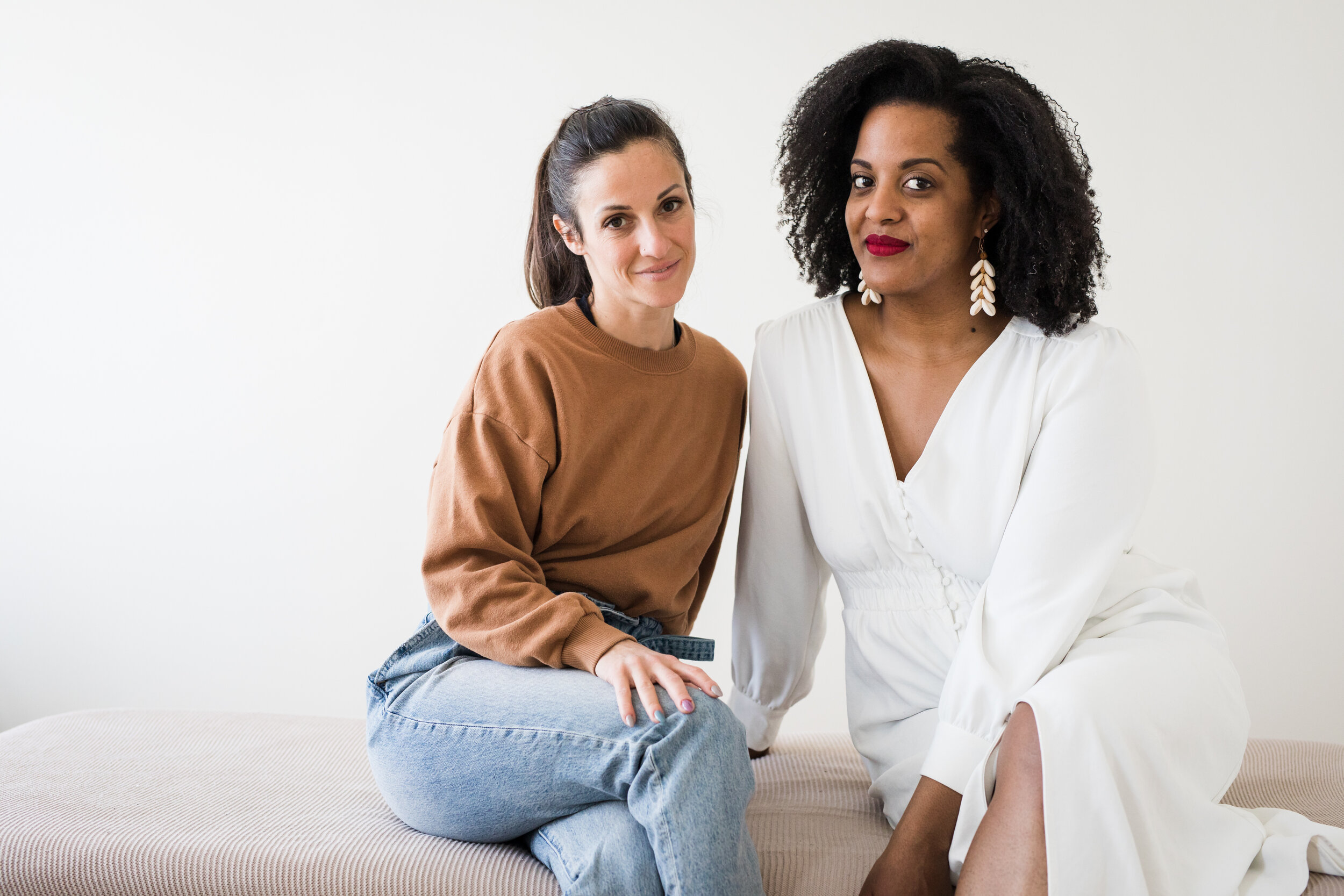
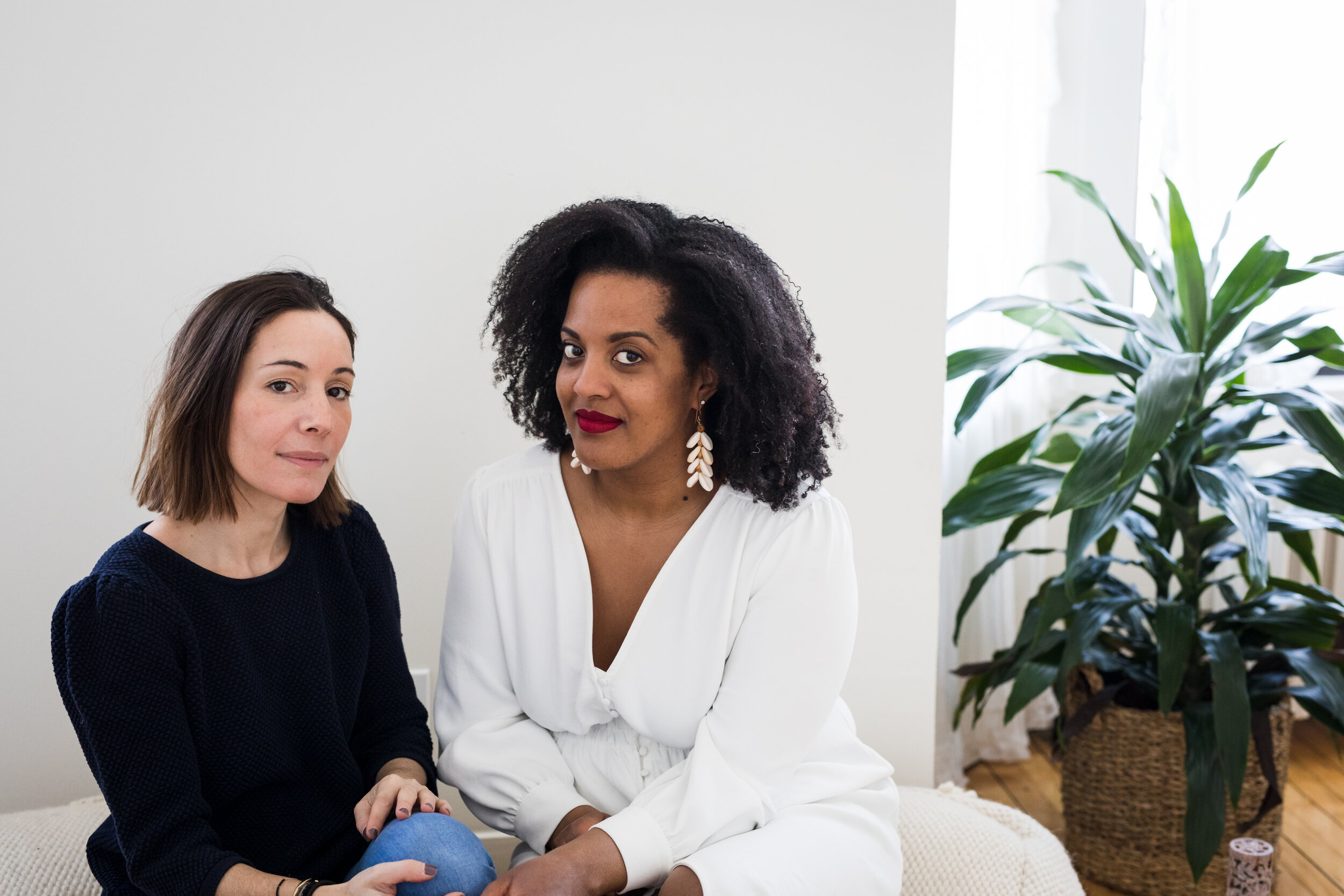
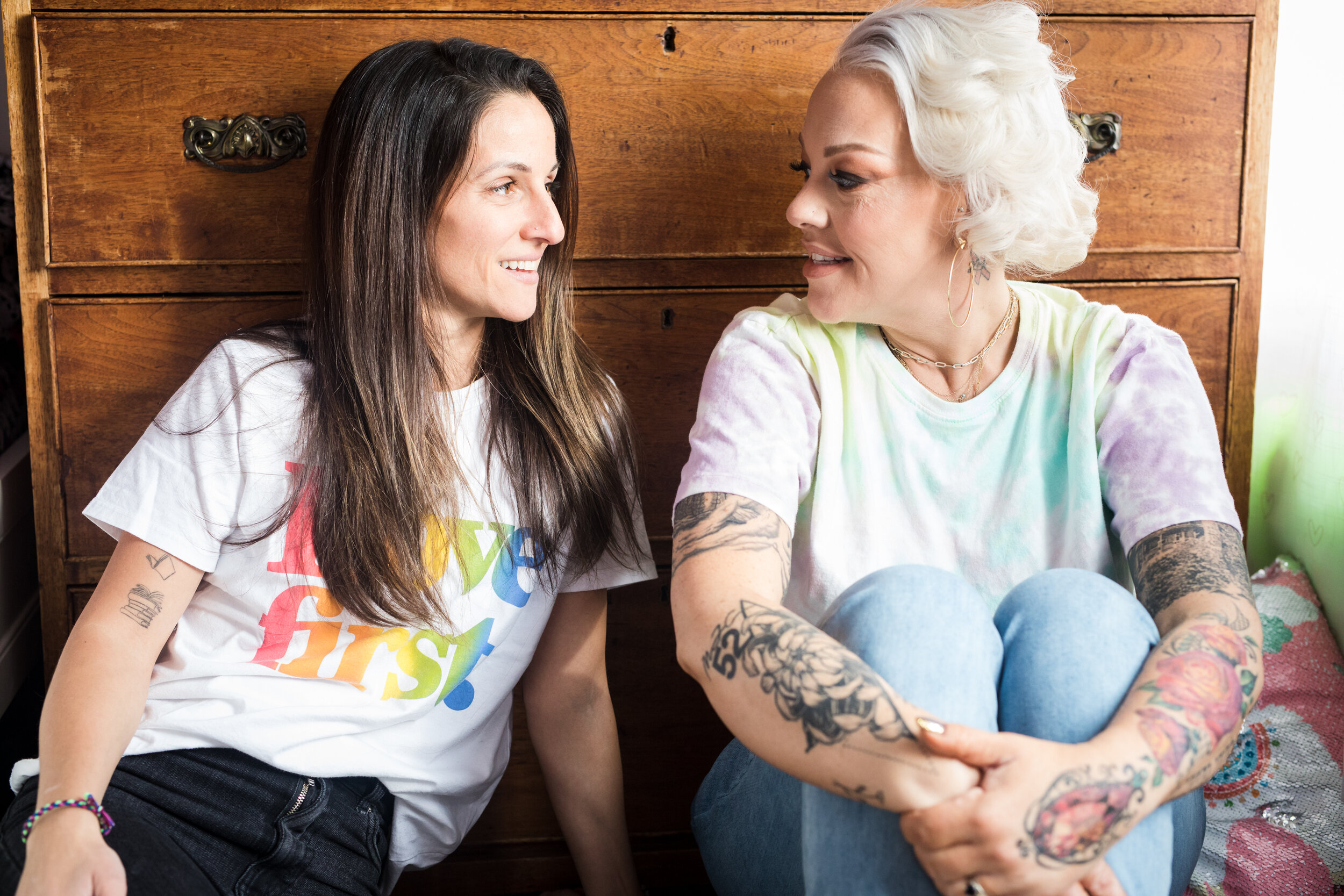
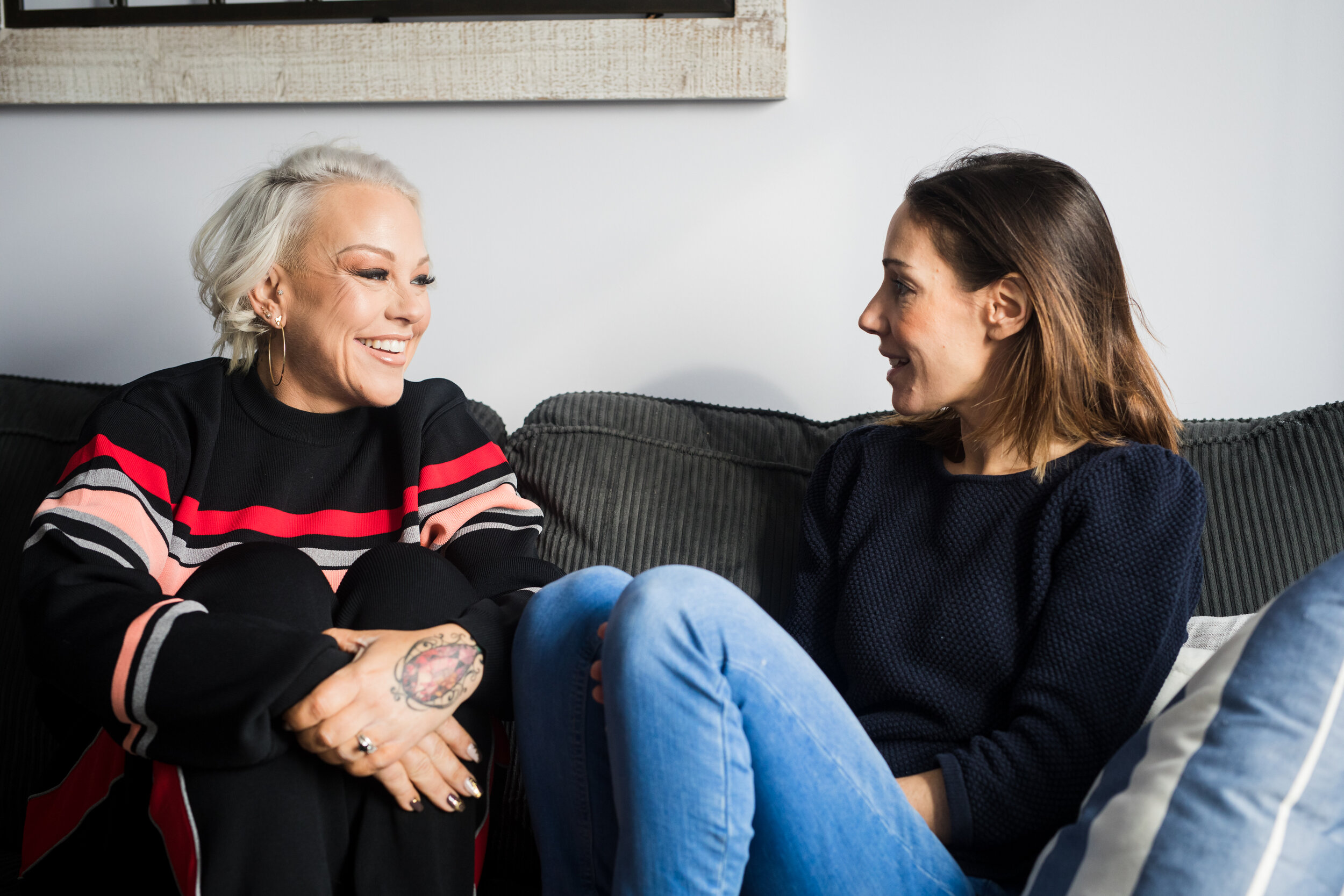
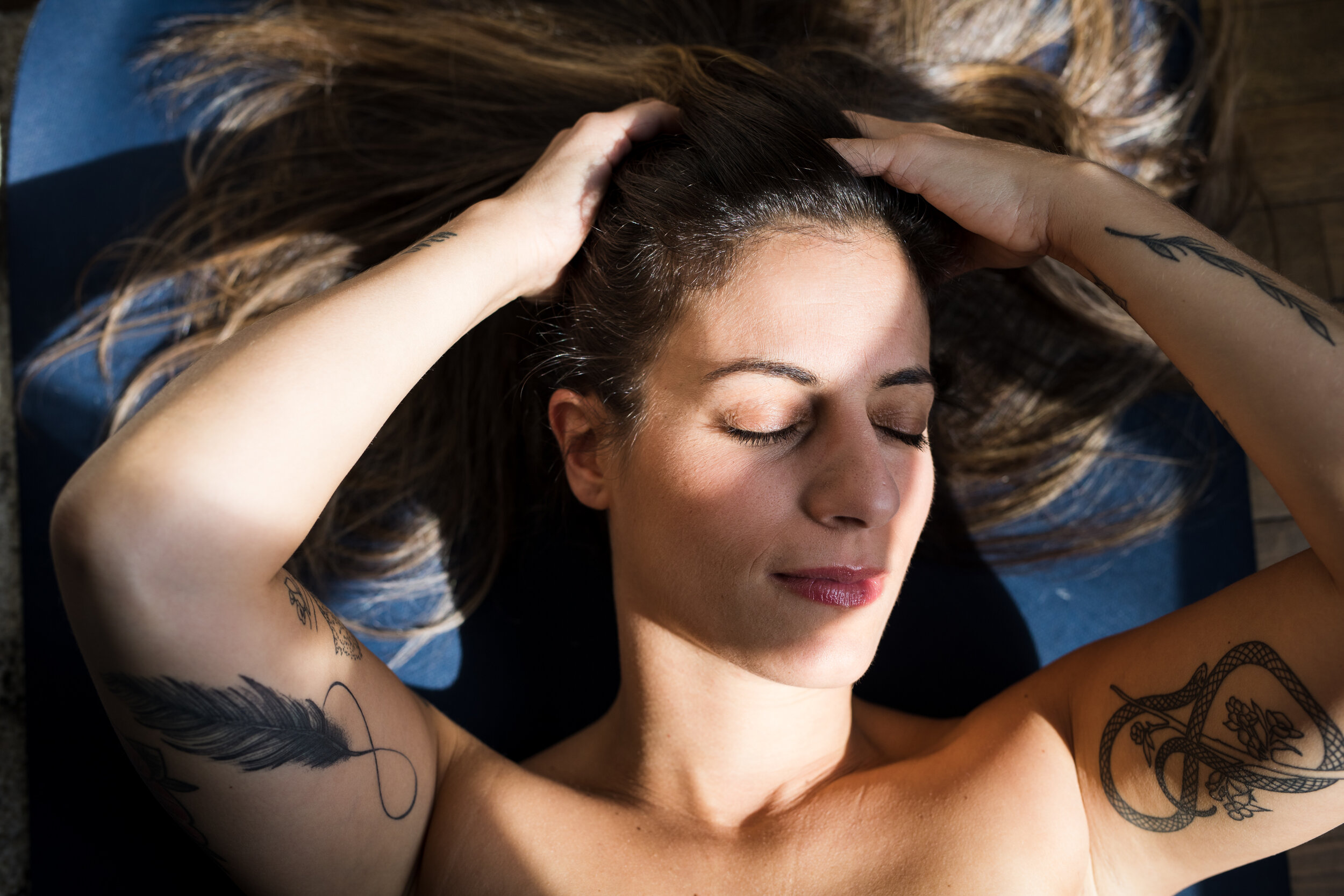
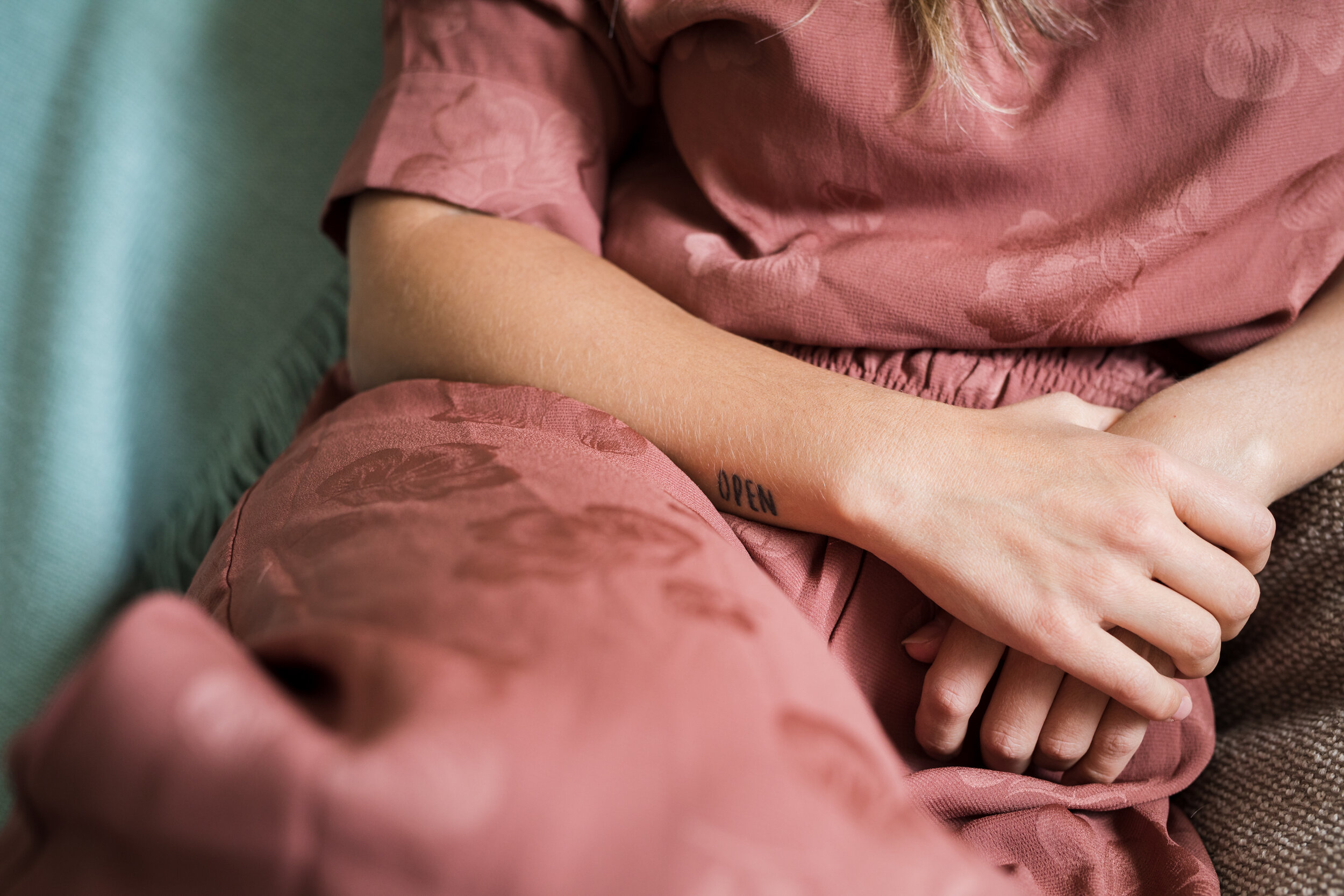
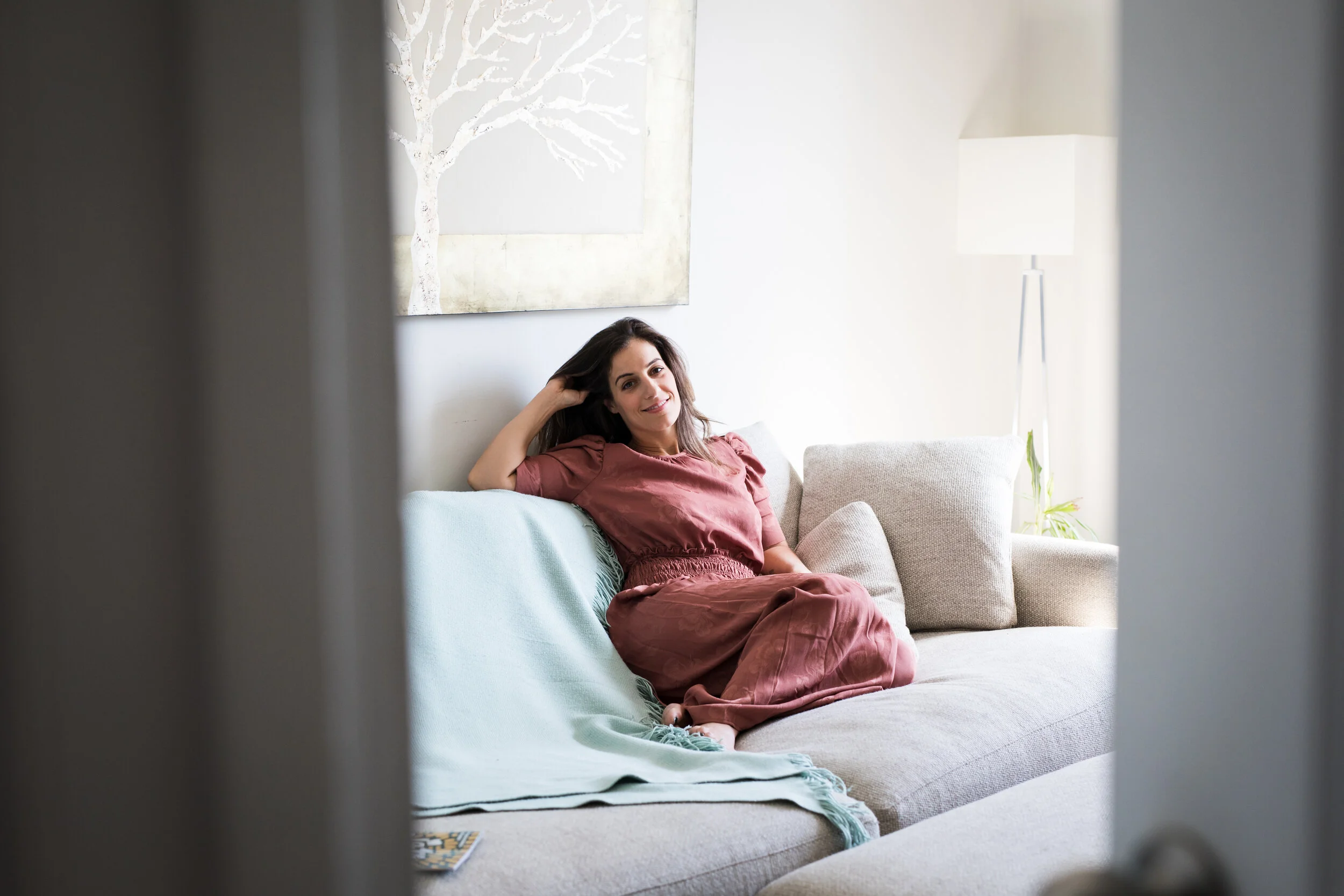
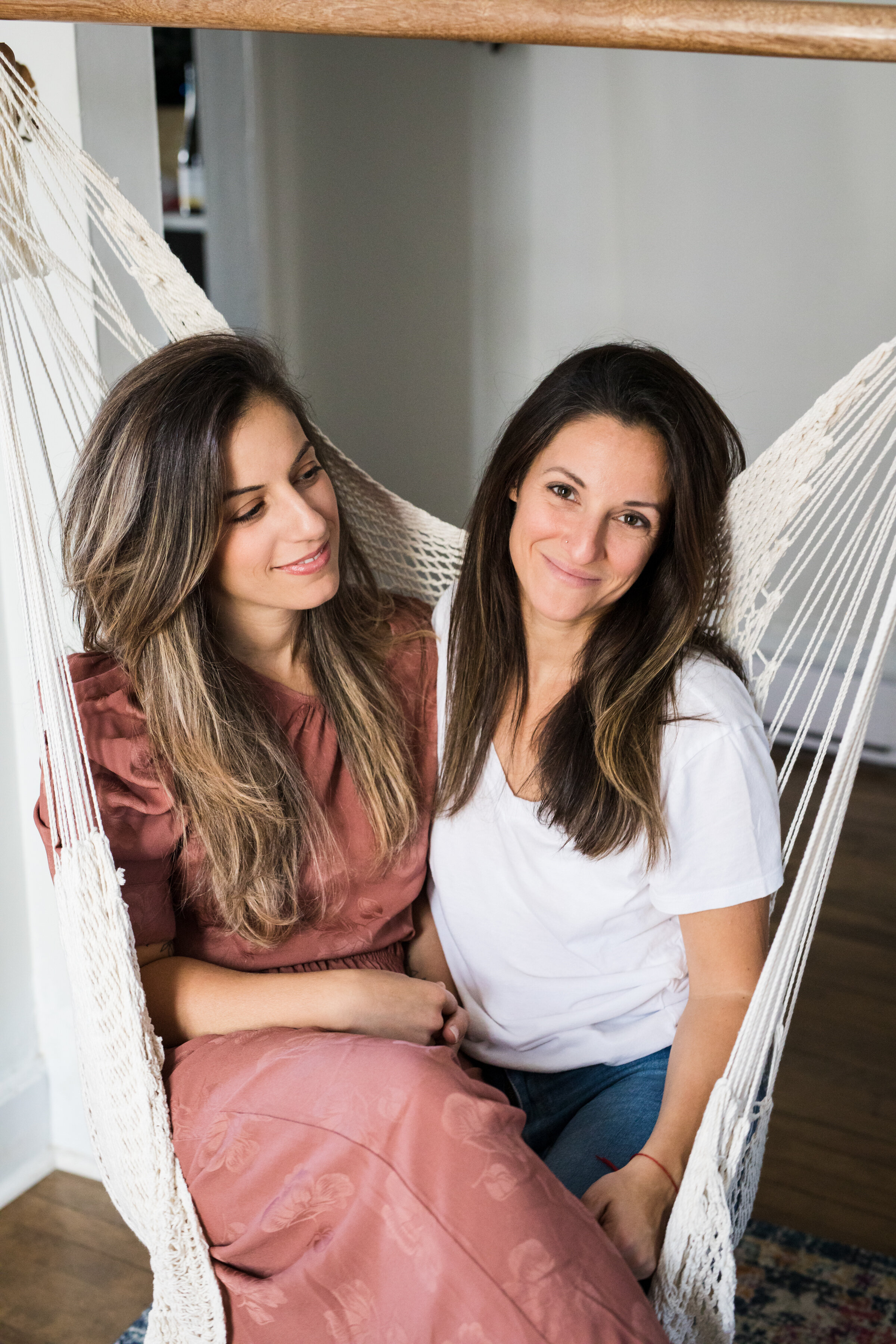
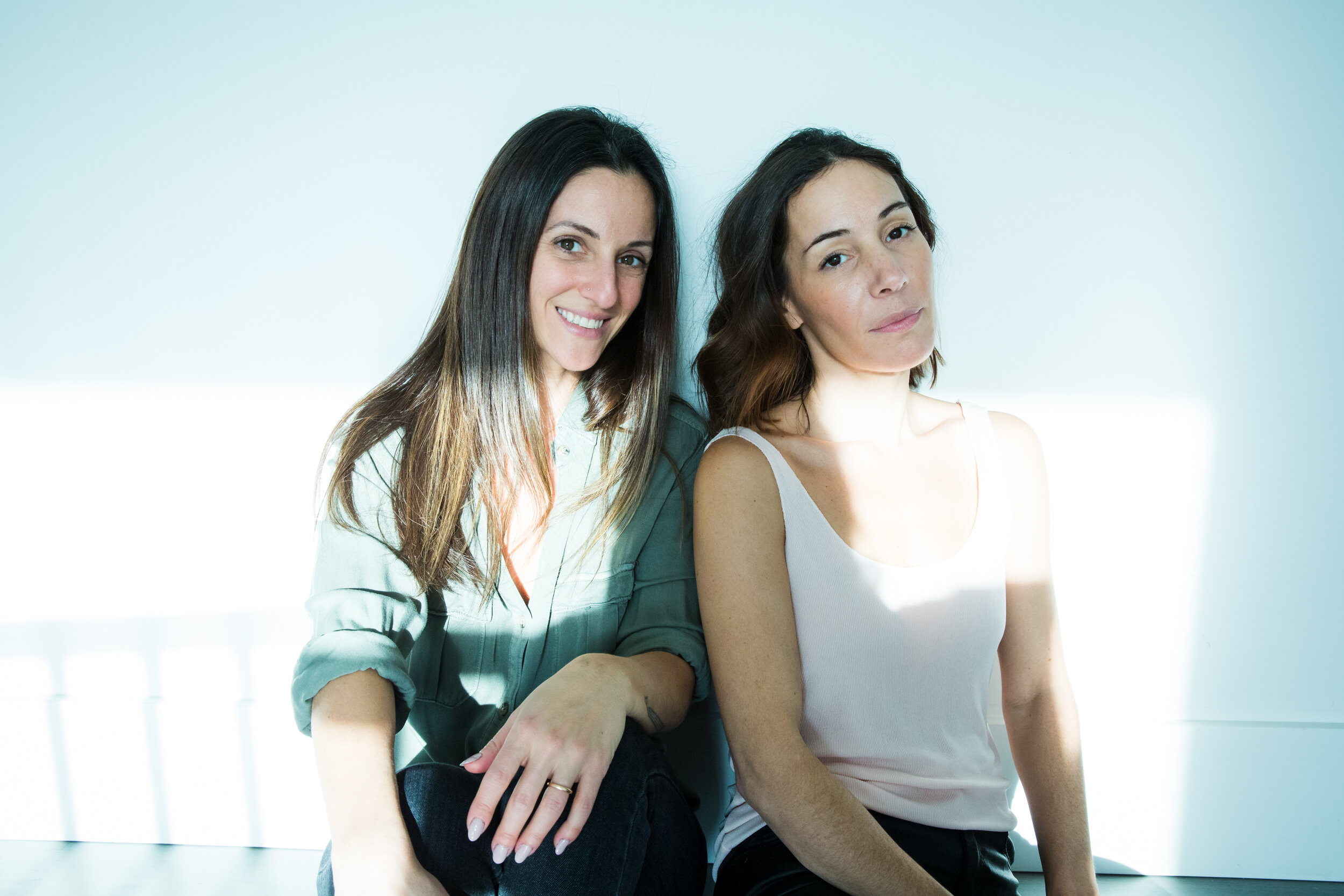
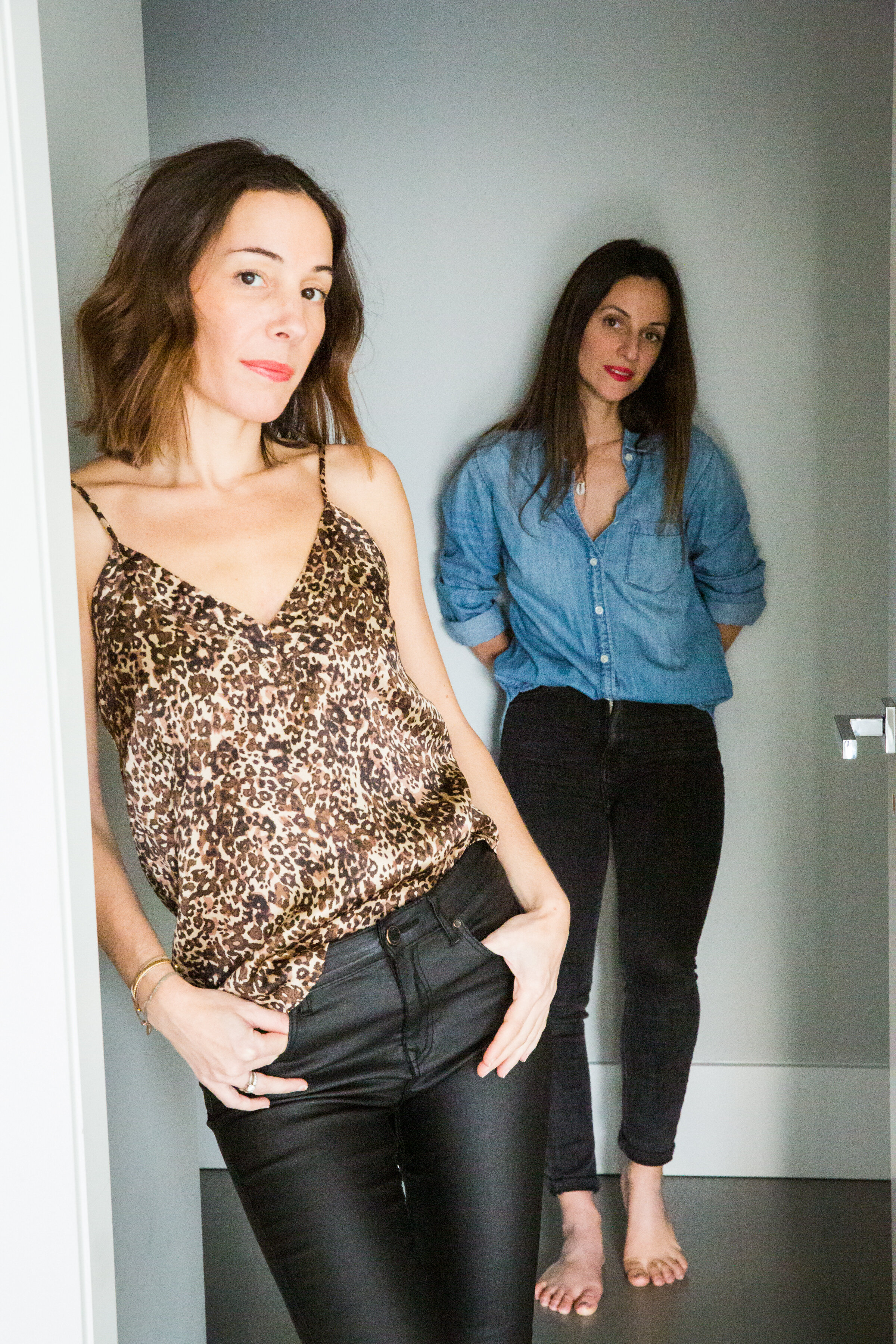
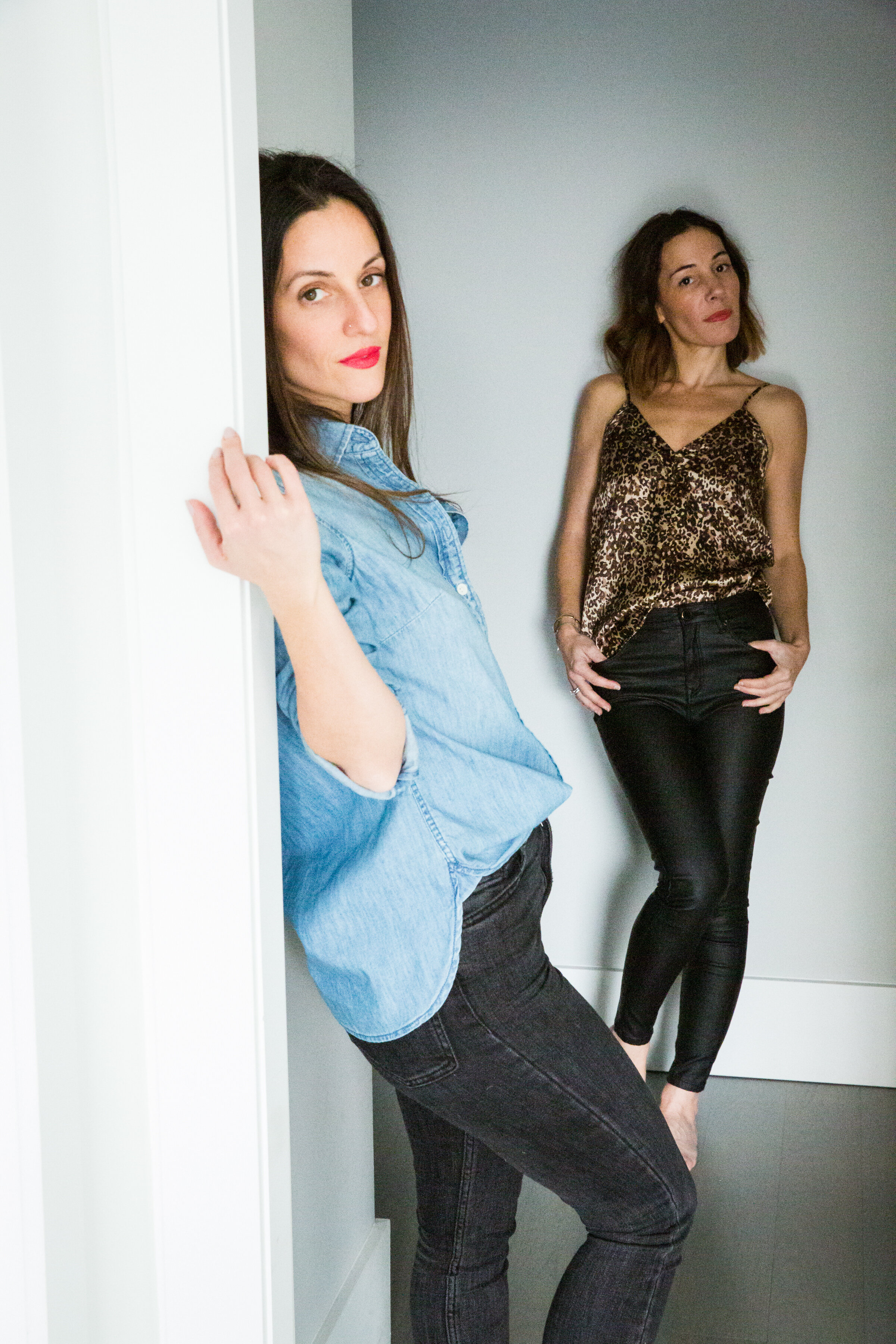
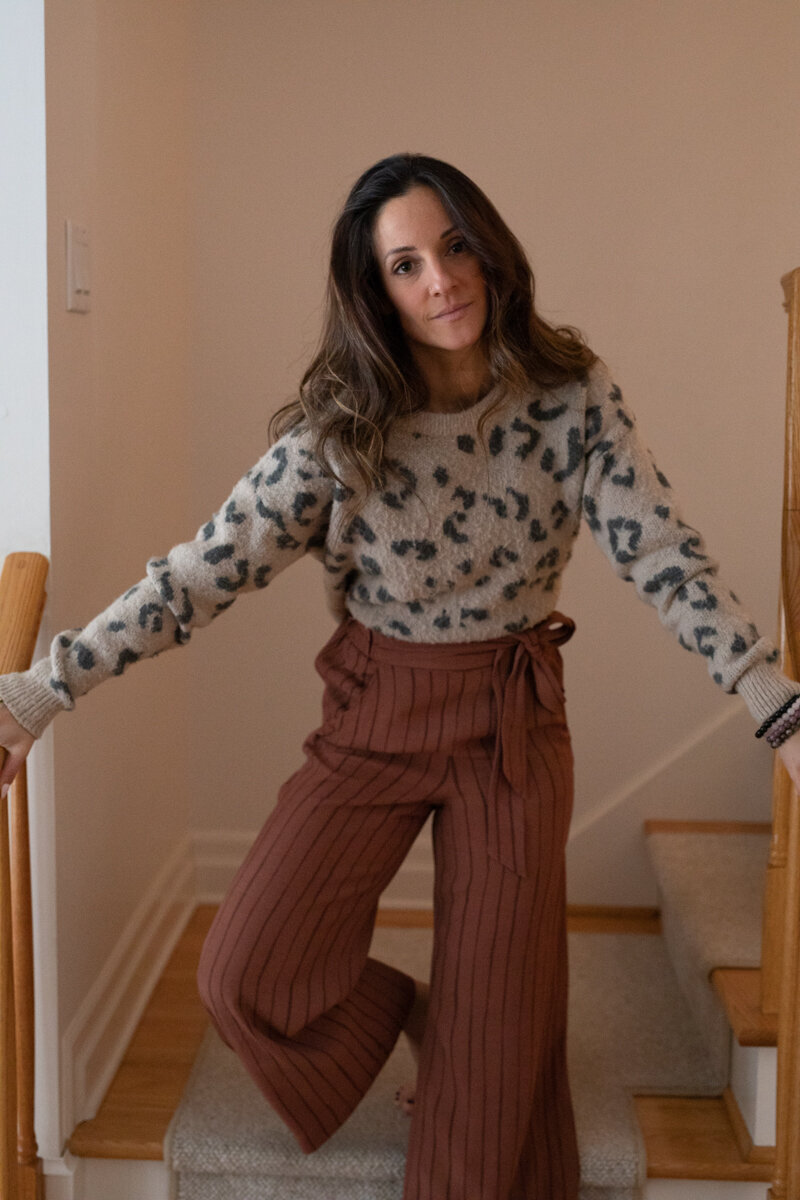
A Strong Smile

Written by Alecs Kakon

Photographs by Jen Fellegi

Every day of our lives we live through events that would seem to be isolated experiences of a person’s overall life story. But for most of us, and this is a big proclamation, we are a sum of our parts. Each event is an episode in our own personal television series; each experience is a product of past events, all layering one upon the other to create the people we are. Informed by our context and experiences, we are not made up of floating parts that magnetically deflect one another, instead each part is an extension of another lived experience all bouncing off each other and reflecting one another. I believe this to be the very nature of a human life. Sitting down with Christina, we talked about identity, choices, and how perspective plays a big role in how we perceive and understand the moments we live.

profile-projects

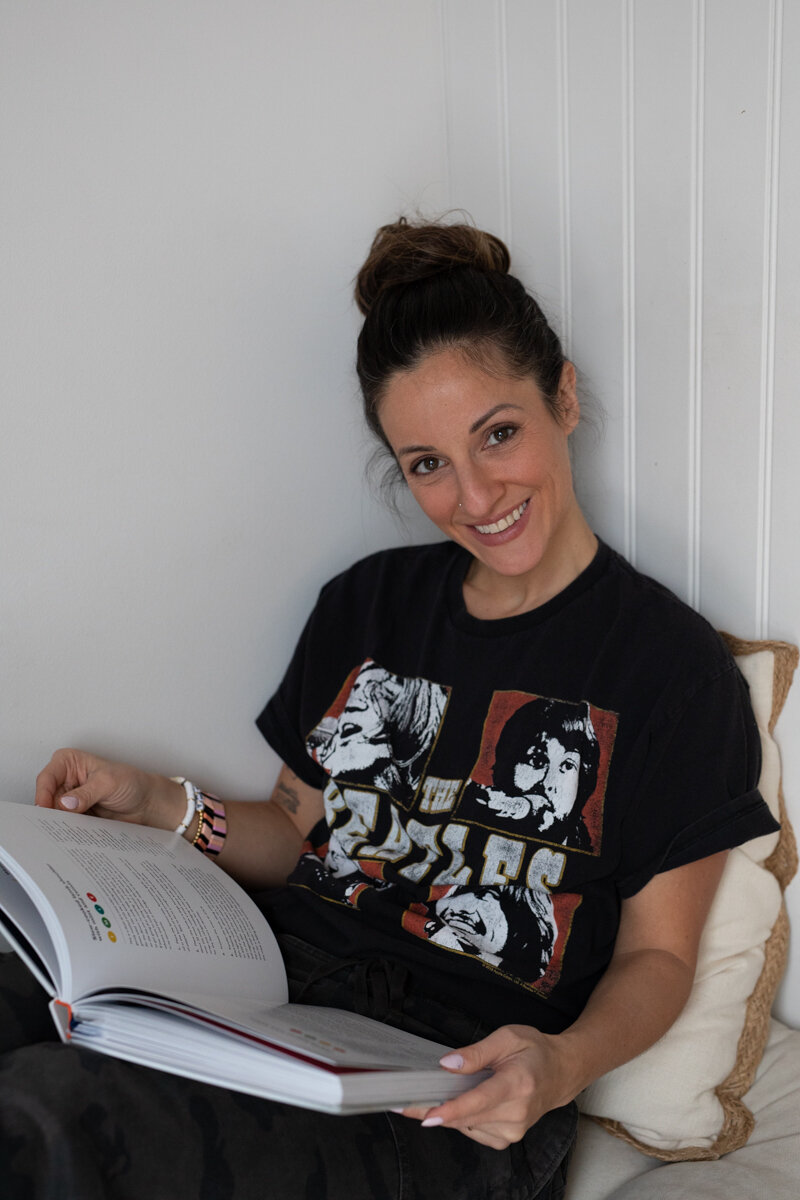
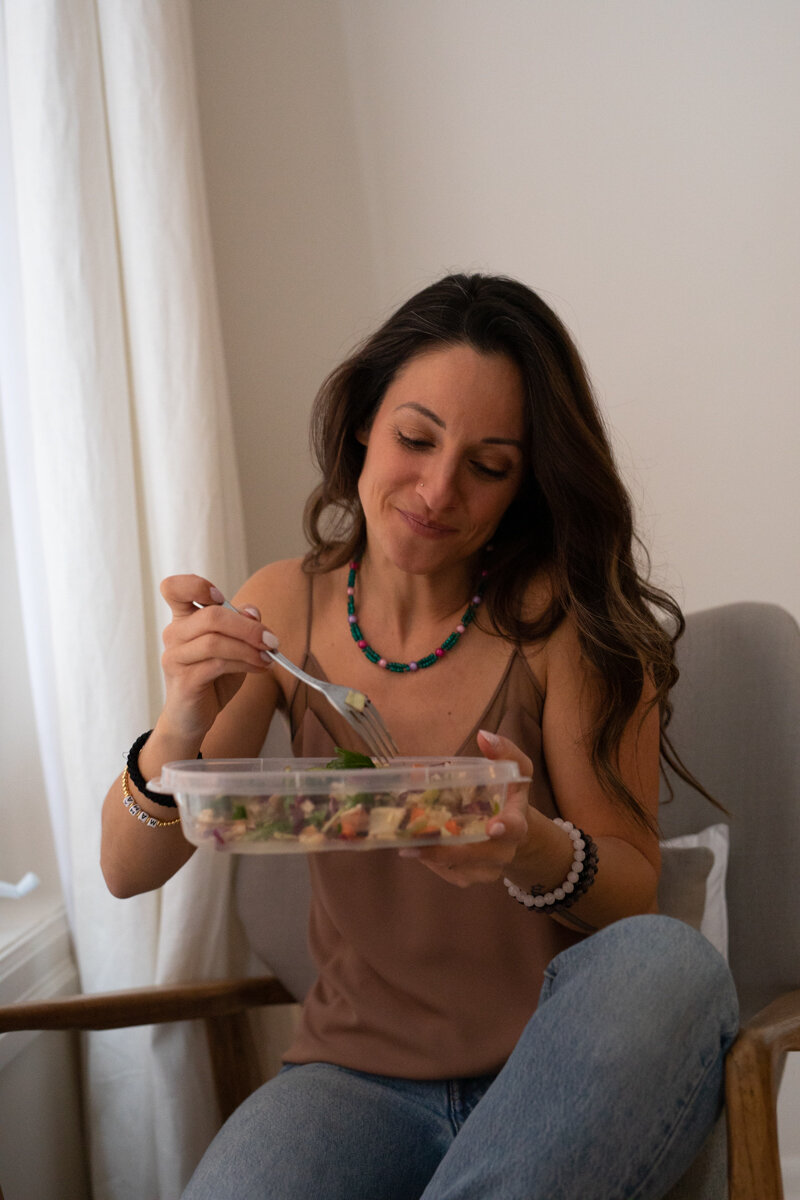
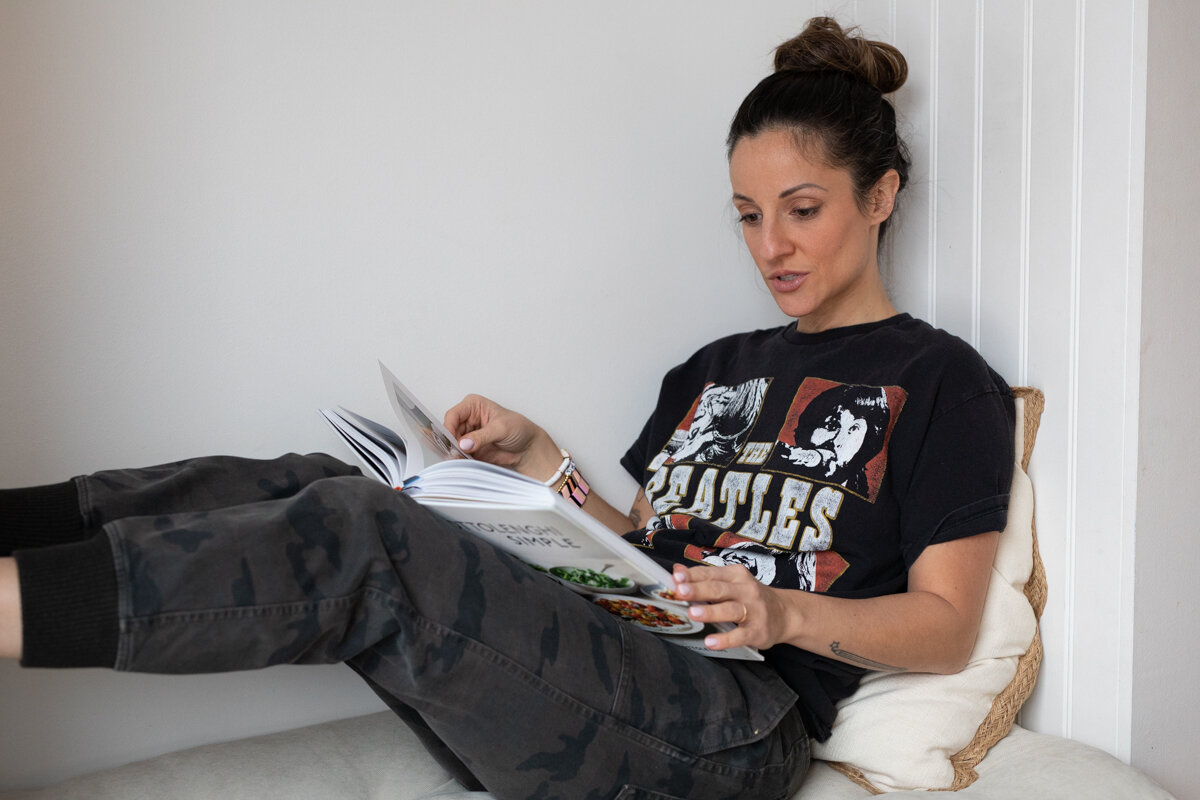
Christina was born and raised in Montreal. Daughter to traditional Italian parents, Christina grew up in the midst of the Jewish ghetto where being an “outsider” gave her a depth of character that carried her through everything from her elementary and high school experiences, professional life, and today, her marriage as well as motherhood. Giving her a sense of identity that allowed her to choose to stand apart or sheepishly fit in, Christina intimately experienced that we are all different, yet in the end, we are all really the same. Navigating her social life—and later on romantic life—was a balancing act between knowing who she was within her strong Catholic Italian family, and socializing with a largely monolithic community of Jewish members. Her life could’ve seen a clear path had she chosen to conform to house rules, however, being an altar girl was not the life she had in mind, and although she felt (and still feels) a strong connection to her Italian heritage, she knew very young that she didn’t have to choose one over the other, because she was destined for a hybrid identity.

Growing up breaking the rules and creating her own path, Christina chose to form her own religion so to speak, drawing from the people around her and infusing her traditional worldview with her community at large. She created a greater sense of family which includes close friends and her one and only boyfriend she’s ever known (her now-husband); together, they’ve harmonized the Italian-Jewish combo to form their family, comprised of two little girls and her baby boy.
profile-projects

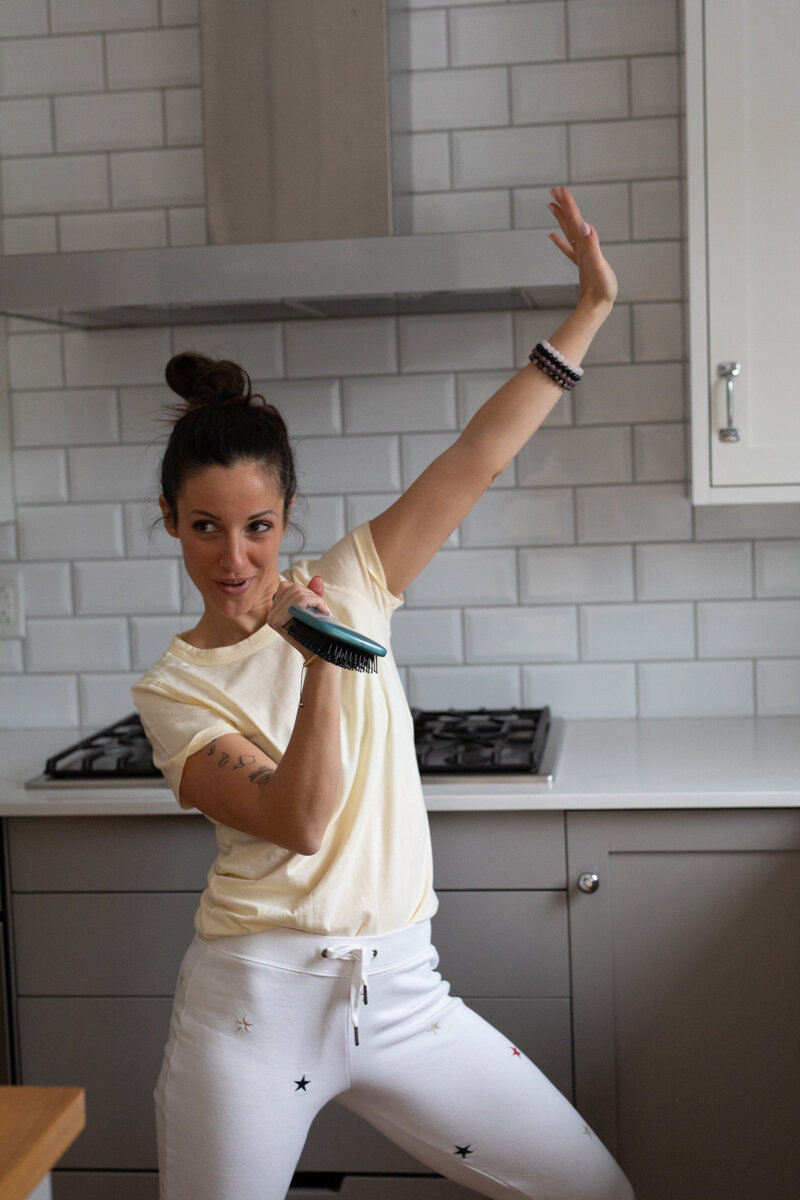
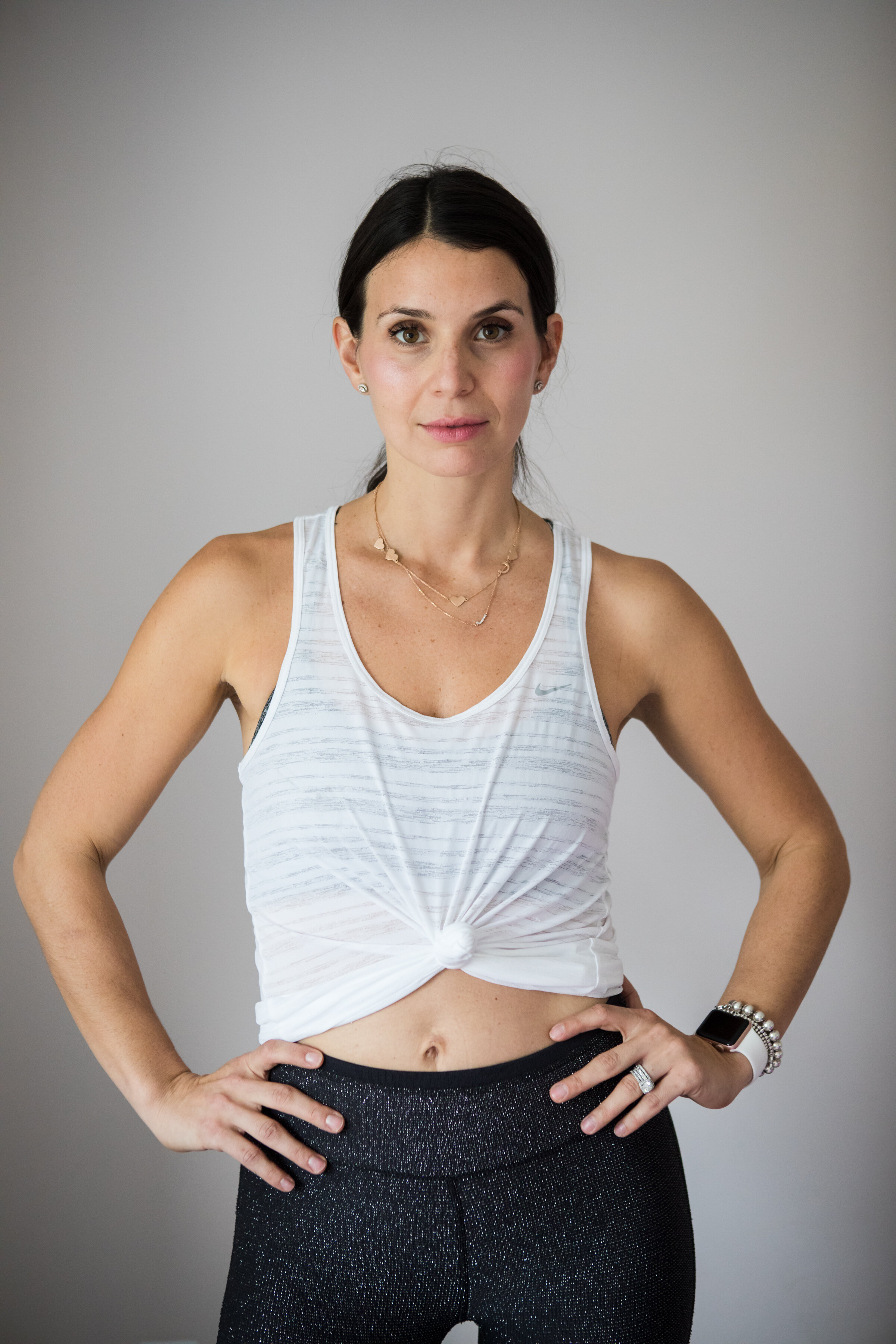
As a child, Christina always knew that the one thing she ever wanted to be in life (aside from whatever professional goals she had) was to be a mother. Christina raises her children in a home of boundless traditional values, but most notably, her parenting is judgment-free and respectful of everyone’s beliefs. One basic tenants that guides her as a mother is to teach her kids to build a character tough enough ‘to not sweat the small stuff,’ and to be strong enough to not dwell in the negative because “if we stay positive then we can overcome anything.” That idea of staying positive is significant and the smile she wears is permanent. Although a positive frame of mind can sometimes veil the fear she has of showing any vulnerability, it is also an authentic badge of her core values: find the happiness. 

Christina’s life has been pretty much “sun-kissed” (my words, not hers); “I’ve never truly been shaken,” she says. “I’m 31 and so far, the other shoe hasn’t dropped yet. It’s bound to happen soon, right?” Christina’s biggest fear is that because she has been so lucky in her life,  it’s only a matter of time until she’s faced with an insurmountable challenge, a deep sadness or loss. But here’s the thing, perhaps she has been faced with challenges, and although not traumatic or painful (on a relational level), challenges they’ve been nonetheless. Perhaps Christina’s upbringing, her sense of self and no-bullshit attitude, has given her the capacity to push through life’s difficult moments. Perhaps, because she has such a happy-go-lucky outlook, these “trials” have been categorized differently, unconsciously building her strength as well as character.

profile-projects

It takes going through hardship to build character. I believe that to be a fact. However, I also believe that we must first define hardship. For Christina, being kicked out of her family home for taking birth control in her teenage years was a test of character; a very explicit life lesson that taught her from a young age that she was not an extension of her parents, she was her own person with her own set of values. Marrying a Jewish man was not a rebellion against her parents, but rather a testament to her truly having constructed her own identity with very firm lines drawn as to where her parents end and she begins. I derived one very clear truth from our conversation: we are all informed by our past, each of us a synecdoche of our experiences—none of which are singular or isolated—all of which collect in our memory, building character, instilling values, and creating belief systems that will guide us when we are faced with life’s challenges. So when that shoe drops, Chris, you can rest assured that you can rely on the person you are, the person you worked hard to be and become, to help you get through whatever life may throw your way. 
Parenting Her Past

Written by Alecs Kakon

Photographs by Jen Fellegi

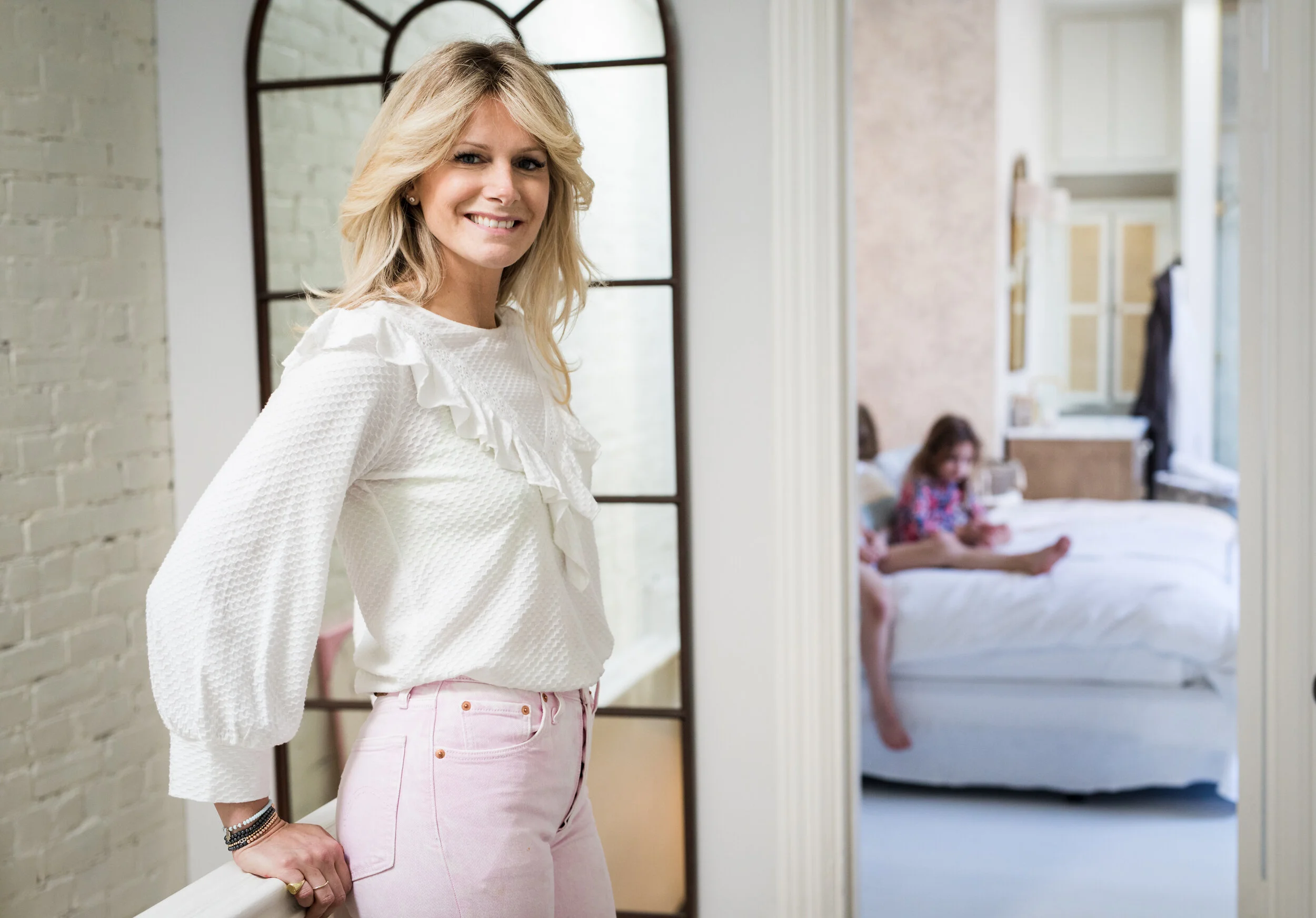
Maybe it’s a generational thing, maybe it’s a culture gap, maybe it’s just differences between people, but there’s something inherent in the parent-child relationship that creates that push-pull contrast. We learn from our parents, we take the good, we filter out the bad, and we try our hardest to do better. Despite our best efforts, times change, and the cycle repeats. Our kids take the good, filter out the bad and they do even better. It’s an up-cycle and it helps us, as a society, strive for more. Some of us have been imbued with values that have shaped us and our view of the world. Some of us have to work against what we’ve been taught to break limiting beliefs. Even for those who feel a strong connection to their parents’ way of thinking, there are tense moments that shift the potential for alignment. In my family, religion played a big role in the home and in our traditions. Perhaps it was because I had that anti-establishment, rebellious nature, or perhaps it was my strong feminist inclination, but I had a hard time connecting to my religion and by default, much of what was passed down in terms of religious beliefs became a hot topic of debate growing up. On the flip side, there was a strong sense of family togetherness that was a driving force in our home. Nightly dinners, weekly brunches, holidays, birthdays, vacations, spontaneous lunches; we spent and continue to spend a lot of time together, because family is something that was (and still is) intensely valued in our home. As a mom, so much of how I raise my children is a reflection of my upbringing. Together with my husband, we’ve created our own set of values, some based on our respective childhoods, some on our individual interpretations of the world, and still others slightly reactionary to what I may have disliked growing up and want to improve upon. Sitting with Rebecca, she poignantly remarked: “I have a healthy relationship with my ideas and values. But sometimes there’s that little voice in my head that wants to sift through and separate the values that belong to me and those that belong to my parents. It’s a work in progress, but it informs my parenting.” It resonated deeply, that little voice she described, because I think we all have it. But, how much of it do we let filter in? Our discussion led us down a few paths; we discussed the incredible closeness of her family unit, her excitement to explore the world outside her home, and how she’s fused it all together in her journey to self-discovery.

Rebecca was brought up in a traditional household, complete with a hardworking, entrepreneurial dad, a creative, stay-at-home mom, 2 sisters and a brother. Strong boundaries governed the home and as the importance of keeping the family together was top priority. “We were forced to spend a lot of time alone with each other. We actually couldn’t do anything on the weekends because we went out to the cottage together every weekend. It created such a strong family bond and still today we are all so close,” Rebecca says. “But it also put a lot of pressure on us to stay together, just our nuclear family. I see now that so much good came from that, but in the moment, it didn’t necessarily feel that way.” Whether explicit taught or subconsciously absorbed, a strong sense of belonging was established, nourishing Rebecca’s soul and nurturing her self-confidence. “My dad was so loyal and determined. Those attributes are valuable to me and I carry them in my relationships and career. There are parts that felt controlling or at times I felt judgment was at play, but he had a clear vision of what he wanted for us. My mom was a non-conformist, so despite the standards my dad held us to, we always had her as a model. I think that helped a lot in understanding his openness to a bigger world. I think it created a sense of false-freedom within the confinement of the set boundaries.” Rebecca explains. “I think children need room to grow without the strong parental grip. In my own parenting style, I want to make decisions free of judgment, but also with thoughtful intention. Hopefully, we can impart our values and they will stick. When my dad died 6 years ago, it was like a huge security blanket was ripped from under me. There was so much chaos, but we all eventually settled back into each other. Something he did worked, because his values stuck with us all.” Reflecting on her upbringing, there was pause in discerning the acuity necessary to transform theoretical values into applied ones. That’s where the tension lies, I believe.

profile-projects

Always encouraged to think outside the box and figure out her own path in life, Rebecca felt a freedom in her capacity to pursue her own definition of success. “My parents loved new ideas and always supported us,” Rebecca explains. “We had one prerequisite and that was to finish university. Graduating from a bachelor’s degree was such a valuable experience. It taught me great work ethic, and I think learning is a muscle I will always continue to exercise.” Finding the space to freely explore her creativity and expand her mind, Rebecca always sought new experiences either through work, travel, friendships and quite early in life, via the man who would eventually become her husband, “I was so hungry to look outside the family,” Rebecca contends. “The minute I was allowed to explore my identity, I took it to so many different places. I met my husband when I was 18. He showed me so much and introduced me to new sides of Montreal and the whole world at large. He taught me to connect with people based on energy. He opened my soul to so many things. He helped me break out of the shelter of my mould.”

profile-projects

Spending days on end immersed in creative exchanges and sharing ideas beyond the parameters of her life at the time, Rebecca’s world began to grow. “I worked as a waitress at a night club, which was outside of what my parents had in mind for me, but it was a huge stepping stone in my life, because it taught me first-hand about the service industry, which I know has played an integral part in my growth.” In 2004, Rebecca parlayed her work experience, and together with her sister Mandy, opened the first Mandy’s create-your-own salad bar… the rest is history. “I’ve learnt so much from on-the-ground experience; from the book of life. In tandem with my husband giving me space to figure out who I was, my parents showed us unconditional support in our entrepreneurial venture. I’m so grateful that we stuck it out through those first years when we were putting in crazy hours and not making any money, because now we are seeing our brand thrive.”

Bridging her parents’ values with her own, Rebecca ascertains that her beliefs don’t fit into the conventions of one singular system. She has an expansive mindset that has led her down many paths of spiritual fulfillment. “We started working with the Welcome Collective 2 years ago. When we got that first call, we just dove in head first. It took over my life. I couldn’t believe the injustice. I was so deeply drawn to these families and I felt a strong sense of responsibility to give everyone the same freedoms I grew up with. Every person I’ve met is so relatable. Moms, professionals, children, fleeing their countries from these unthinkable situations; I just had to do something.” Rebecca says. “We are here to connect with one another. That’s the human spirit, to give. The first family I met at WeCo is like my second family. They went through something so profound and we met them at that moment and it connected us. They are a huge part of my life. They are family.”

profile-projects

As a I listened to Rebecca speak so passionately about WeCo, something clicked inside of me. She grew up with such a strong sense of family, and although in her upbringing, the messaging was contained to her nuclear unit, the definition of family is an abstract one. And so the cycle goes, we take the lessons from our parents and we transform them into something bigger.

Healing Her Mind

By Alecs Kakon

Photos by Jen Fellegi

The events of our past, experiences both good and bad, shape the people we become and leave an imprint on the map of our bodies, Impacting our perception, behaviour and beliefs, our past, especially the childhood years, are the Möbius Strip of time; our bodies and minds the manifestation of tethered matter, rebounding forward and back. It’s virtually impossible to be completely free of words that once stung us, events we’ve witnessed, traumas that shook us, and moments that have changed us. For so many of us, myself included, events that took place in the past, events experienced by a child, were absorbed into the fabric of my being, left to be mediated by the mind and body of a 10 year old. Unskilled in the art of creating meaning at that age, it is our parents, guardians, teachers, and so on, who help unpack events so as to transform even the worst of experiences into moments of purpose and reflection. Feeling overwhelmed with sensations bigger than our known world, Tamara’s spirituality and connection to herself offered a mosaic of significance to her life that as a child presented as darkness, but as a grown woman offers light. With illuminating consciousness, Tamara and I sat down to discuss her isolating past, finding her purpose, and how she continues to remove barriers that impede her from living her truth.

profile-projects

Qualifying her younger years with words such as dark and lonely, Tamara’s childhood was the site of a lot of bullying and rejection. Keeping to herself and finding solace in her isolation, the once-extroverted Tamara was quickly rendered introverted as the insistent mockery and criticism naturally took its toll. “I felt so oppressed. I was always sad,” Tamara describes. “At home, I would walk into a room and my sisters would leave and go upstairs, or I would sit on the couch and everyone would switch couches to sit further from me. I didn’t understand why it was happening, but the message came through loud and clear.” Tamara had a strong connection to her spirituality, which incidentally would be what ultimately kept her alive. However, as a young child, it was the source of much of her pain. “I heard voices, saw visions, and had dreams about people. I would tell them about it and they would call me a witch or weird. It hurt a lot,” she explains. She was only 11 years old when she felt her life was no longer worth living. Not feeling loved or worthy of love wrenched at her insides, and so she decided to end the pain and commit suicide. “I planned to hang myself, but I remember thinking I had to look for the signs. If someone walked in, then that was a sign that I shouldn’t go through with it. Everything was ready and I was about to go through with it, but someone walked in.” Tamara’s life was spared, but the darkness persisted. “There is good energy and bad energy, and I think because I felt such darkness, I attracted a bad energy. I would be in the metro and the voices would tell me to jump. But, I learned not to listen. Eventually, with steady discernment and a lot of self-healing, I dispelled the negativity.”

Always in tune with her higher purpose, Tamara knew that her life’s mission was the heal people. Originally, not understanding the reason for some of the traumatic experiences she had to live through, she now recognizes that she couldn’t control the life she was given, but she could unbind herself from it. “At one time, as a child, I used to sing and dance, I was extroverted. But I shut down because of everything I had gone through. Now, with my daughter, I let a lot of that go. She heals me. I’m getting through the barriers. And that little girl inside of me, the one that is right here, right on the tip of my lips, she wants to sing again.” Tamara explains. “I know I can’t ever go back and change the past. I’ll never be who I was before the pain, before the wounds. But I am working on removing all those barriers that keep me from finding my way forward.” Memory is like a mirage; the moment lost forever, but the sensation lingers. Acting as triggers or limiting beliefs, the past can shackle us. But, we can dismantle the pain and the hold it has over us. We might not be able to rewind, but we can unlearn the past and transform it into a lesson learned.

profile-projects

Spending many years diving inward meditating and healing, Tamara’s repressed past has come to the surface, and with that, she has been able to clear her path from darkness. She has been able to leave the past behind so that she can accomplish what she came here to accomplish with compassion and forgiveness. Under the name Mama Oracle, Tamara is currently working as a spiritual counsellor, doula, and Reiki and energy healer. Manifesting her purpose and reconnecting with her inner child, Tamara has transformed all of her learning and guided healing into helping those around her. Leading with compassion rather than empathy, Tamara explains that she teaches people the skills needed to save themselves. “I give them tools to heal rather than be the healing tool.” The complexity of her consciousness has always guided her, and today, she dedicates her practice to clearing the pain of those who seek her counsel.

Bob Marley once sang “Emancipate yourself from mental slavery, none but ourselves can free our minds.” These lyrics beckon something inside of me every time they are summoned to mind. Free from our past, free from the narrow perspective that binds us, free from the rope that keeps us tethered to the pain, it is only I who can release those shackles. Something shifted inside of me as listened to Tamara talk about how she expresses such gratitude, relishes in her capacity to love, abounds with forgiveness, feels compassion, and releases toward freedom. Her conscious choice to strengthen her mind—bring her repurposed past with her to create a life of healing—is what allows her align with her purpose and stand in her truth. I turned inward and thought about how although I am no longer defined by my past, I still have work to do to loosen the hold it has on me. I write to untangle the knot that continues to grip at my stomach, and with each story, I shape shift and meaning make. With each story, I walk toward emancipation. That’s how I will find forgiveness and heal my mind.

The Person She is Today

By Alecs Kakon

Photos by Jen Fellegi

Is there an “I” a priori to the discovery of the self? Does she live behind those eyes, in her mind and body waiting to be explored and found? Or, does she come into being through circumstance; given shape and depth through lived experience? Or, better yet, is the answer some shade between these two pendulous options? Before you can say for sure on which side of the swing you stand, a more matter-of-fact approach to this esoteric question can be found in the answers to whether or not one needs to know where she comes from to truly know herself, if it is possible to evade the impact of lived experience, and so on. My happy balance has been found in Heidegger’s claim that “who we are might be predetermined, but the path we follow is always our own choosing.” I’ve always looked out onto those with a positive outlook, rosy glasses as they say, to investigate where their joy comes from. I thought that if I followed their happiness down that yellow brick road, perhaps I might find the source. But, that’s not always the case. I’ve had so many enlightening conversations with women who have proven that although the odds were stacked against them, we choose who we are and those choices bring us close to happiness. Sitting down with Allison, we walked down memory lane and discussed hardship, loss and gratitude, and how everything in her life has found meaning in the contours of the woman she is today.

profile-projects

After her parents’ divorce when Allison was only one year of age, she lived between her father’s house with her step-sisters and her mother’s house with her half-siblings. Raised amidst chaos, Allie’s home life was less than conventional. When Allie was only in grade 5, her mother, who had long-since been a drug addict, attempted suicide. “I came home from school and she was in her room. No one would let me up there. It was all very weird. I went up to her room and it was trashed. She was just wild, and I know now it was probably drug psychosis, but what did I know then?” Allie explains. “She had picked up a piece of broken mirror and tried to kill herself in front of me.” Allie’s paternal grandparents picked her up and she lived with them for the remainder of the school year. Her father then took her to live in Oakville with him. But, living with her father didn’t offer more safety nor comfort. “My dad was really violent with me. He beat me all the time, and I remember one time, when I was 14, he went ballistic and almost ended my life. I still have the scars in my mouth from a shattered jaw.” Allie ran away back to her mother’s in Montreal. Although her mother didn’t parent her with emotional sustenance, “at least she didn’t treat me the way he did. She was a junkie, but she didn’t ever hurt me or make me feel like I wasn’t wanted.”

profile-projects

Living with someone who abuses drugs had become the norm, the only life Allie had ever known. But since she had moved around so much, it took a while for the school system to catch on to the fact that Allie’s mother was a drug addict. They eventually removed her from her mother’s care and put Allie into the Batshaw system. “There were no beds available near my location, so they threw me into a maximum security unit in Rosemère where I was required to attend a Shawbridge school. I lost the life I had built for myself, I had to leave my school with my friends and quit the part-time job that I loved. All of a sudden, this was my new life. I wasn’t angry before that happened. My life was fucked, but it was the only life I knew. This was different. I was being punished for something I didn’t do.” Just like that, Allie’s life took a dark turn. “I remember we were only allowed out for 30 minutes a day. One day, two girls and I went for a walk and they decided to jump and rob this girl at a bus stop. It didn’t go well, we were picked up by the cops. They were released and I was sent to a maximum security jail for young offenders. I was there for 9 months. I slept on a metal bed. There were no shoelaces or belts permitted, there was barbwire fence, and we weren’t allowed to go outside. It was jail. I actually celebrated a birthday in there. It was brutal. Eventually I went to the Shawbridge campus, then Renaissance,” Allie says. “I was the girl who just kept fighting and it wasn’t until this one woman told me that if I kept fighting, then I would I would never get out of there, but if I just smiled and shut up, they’d let me out. It worked.” Allie was finally released back to her mother’s custody. But on her very first meeting with her social worker, she found her mother had overdosed. “When we got there, we walked in and found my mother foaming at the mouth. My first thought was ‘please don’t put me back in,’ and they didn’t.” Allie was afforded independent living and was closely followed by a social worker. Her apartment was paid for with a forty-dollar weekly allowance. Allie continued to live the life she knew: she spent some time stripping underage, abusing drugs, and then eventually, at 19, she moved out West with friends and got pregnant. Inadvertently, that was her saving grace. “It changed my life. There was something in me that just wanted to have this baby. It changed things for me, because I became a mom. I worked two jobs just so I could take care of my kid. I remember I used to bathe him in a Rubbermaid bin,” Allie says. “It was tough taking care of him on my own, but he also gave me purpose; he gave me family.” Without knowing what had been missing all along, Allie had created her own family. She was endowed with purpose and felt the significance of her role as a mother. She found meaning, and that ultimately helped her find her way out of the darkness.

profile-projects

At 25, Allie met the man who would later become her husband. He immediately took her son on as his own and they were an instant family. A few years later Allie’s daughter was born. “Before I had my daughter, I completed my conversion to Judaism. It’s the strongest thing in my life – it gives me hope, family and a sense of belonging. It’s the only way of being I’ve ever known.” Anchored to a community that fills her with support and love, Allie had a newfound sense of self-worth from which she drew life lessons to teach her children. “I never had parents around to teach me how to value myself or teach me how people should treat me, but boy am I raising two amazing humans.”

Using all of her experiences as stepping stones toward a lighter future, it was only 3 years ago that Allie reassessed her life and acknowledged that she was unhappy in her body. Her weight yo-yoed during each of her pregnancies, but after she had her daughter, she was 365 pounds and couldn’t lose the weight. Her father had passed only just a couple years prior and the loss had taken its toll. “I was so lost, I just stopped trying. But, a couple years later, I was in so much pain I could barely walk. I knew I had to do something about it.” Having always felt pain, it wasn’t uncommon for people to blow her off telling her that she wasn’t hurting, she was just “fat.” But, she had tried to lose the weight herself and nothing was working. Allie decided to get Gastric Sleeve surgery. During the surgery, GIST tumours were found and after having almost gone septic, Allie had an emergent bowel resection where they removed a 16cm tumour. “A lot had gone on after the surgery and it was only six days after I got home that I lost my mother to an overdose. So many ups and downs, but the most validating thing was finding out I had this rare disease called Hashimoto.”

profile-projects

Allie shed the weight of her past, metaphorically and literally, and has finally come into a space of positive self-worth. “This last birthday was the best birthday ever. For the first time in my life, I know who my friends are and I’m so happy. I love me. I want to ski and go on rollercoasters and do all the things I could never do. There is so much on my checklist, I’m just happy to be here,” Allie says. “I’ve been through so much, but it’s all driven me to be the person I am today. My children are my everything and they give me purpose, I just started living and I want to do everything with them.” There was darkness and what felt like interminable suffering, but through the hardship, Allie recognizes that she made it out, she survived. “Every day, I get to wake up and breathe fresh air and I get to love and be loved. I know that I’m a little bit extra, but if I love you, I will smother you, because, I know what it’s like to have a final conversation with someone, I know what it’s like to lose. We can always find a reason to be unhappy, but I choose to be happy.” Allie very simply could have been a product of her circumstance, the path was laid out for her. But, she chose a different avenue, one paved with family, love and gratitude. Her past does not define her; she controls that narrative. “In a world filled with reasons to be angry, I decided I want to be happy, love myself and be a positive impact on my children.”

Confronting Herself

By Alecs Kakon

Photos by Jen Fellegi

I have a hard time standing up for myself, which to those who know me sounds completely impossible since I’m so opinionated and strong-minded. But it’s true. Confrontation in any form makes my face red, my chest hot and my fingers tremble. In fact, I’ve lost friends because it felt safer to walk away than to confront an issue, regardless of how small. It’s probably the part of myself I like least - mostly because, even though I understand where it comes from, I don’t understand why I can’t overcome it. I’ve intellectualized my inability as a fight or flight response, but that only takes me halfway. I don’t fight, I flight. Now that I know that, why can’t I employ healthy boundary-setting and positive self-talk to transform “fight” into good communication strategies? I’ve soul searched and I’ve come to understand that the reason I can’t create safe moments to express myself freely is because I fear that my feelings will hurt people and the last thing I ever want to do is hurt someone. Sitting with Anny, we connected on that same pointed character trait: because she knows what it feels like to be hurt, she never wants to be the source of someone else’s pain. That statement resonated so deeply with me. Anny and I came at being non-confrontational in vastly different ways and for very different reasons, but repressing rather than communicating became a coping mechanism we’ve come to know intimately and have both been making efforts to exorcise. Listening to her talk about her upbringing, we touched on her culture, her body image and the growing pains of what it means to get to know oneself.

profile-projects

As a first-generation Canadian, Anny was one of only a couple visibly distinct kids at her elementary school. Standing out on the basis of her Asian culture on a playground of predominantly Caucasian children, there were few opportunities for Anny to relate to the people around her. “I was made fun of a lot at school. Maybe it was because I brought Chinese food for lunch or because I didn’t speak English at all really,” Anny remembers. “I was bullied because of my appearance, because of my culture, and I felt it. I knew it. It made me dislike where I came from and it made me think that being White was better.” Trying to oppress her Chinese-Vietnamese identity so as to assimilate, the shame Anny felt toward her own culture whitewashed her values. It was hard for her to stand up for herself; stuck in the face of confrontation, it was simpler, perhaps safer, to retreat and change to fit the mould. It was when Anny reached grade two and became more fluent in English, the bullying started weaning on its own. Things settled for her as she acculturated. It was when Anny graduated high school and entered the college setting that her world expanded because she finally met people with similar backgrounds and hybrid identities like her own. She felt more connected to her friends and therefore, began to have a more positive relationship with her own culture. Where she had once absorbed the message that who she was wasn’t good enough, she slowly started to feel stronger being who she is. “I no longer felt like an outsider, because I had found a community. Feeling that sense of belonging really helped me drop the racist attitude I had toward myself and my culture,” Anny explained. “I grew up speaking Cantonese at home, eating Asian cuisine and practicing Chinese traditions, and I hadn’t ever celebrated that in a social context. All of a sudden, I was bonding with friends over our Asian quirks and we were going out to eat pho or other Asian foods. I truly started to immerse myself in my culture.” Now, whenever Anny is faced with any sort of bullying (cyber or other), she doesn’t fight or flight, she actively chooses to shrug it off as she feels secure in who she is.

Although Anny did eventually find that positive connection to her community and identity, the wounds that were created from such a young age saw unhealthy manifestations, especially when it came to what Anny saw when she looked in the mirror. “I had a sort of body dysmorphia. I never felt good enough in anyone’s eyes and that wreaked havoc on my self-esteem,” she explains. “By the time I was 18 years old, I developed bulimia. I would go through cycles of binging and purging. From the outside, you couldn’t tell anything was going on, because my weight wouldn’t change much, but inside I was really struggling.” The dissonance between the outer appearance and inner feeling rested on the fact that Anny didn’t feel she could achieve perfection; if anyone criticized her or pointed something out about her physical body, her mind would translate it as something horrible, and so the cycle went. For more than a decade, Anny suffered from bulimia, and although she stopped at times, she would always relapse: “I only finally stopped in 2018 and that’s because I got to the bottom of the issue after seeking therapy. I’m a very non-confrontational person, and when I felt hurt, rather than speak up for myself, I would seek comfort in food. But, food equalled weight to me. I tried to control my pain by controlling my weight.”

profile-projects

Incapable of setting clear boundaries, Anny felt she couldn’t control how people acted toward her, but she could control her weight; she couldn’t hurt other people, but she could hurt herself, so she would purge. The vicious cycle stopped when she understood what she was doing. “It was a serious wake-up call for me and I learned that if I set a line or a boundary, then I can learn to stand up for myself. It’s a process, but I’m working on it,” Anny says. “I’m open in admitting that this was a problem, but it has helped me get to know myself better. It’s part of what happened in my life, but it doesn’t define me.” When at one time, the pain points trickled into her life subconsciously, Anny has now brought awareness to her triggers and exercises self-governance, mindfulness, and healthy habits both in her relationship with food as well as through positive self-talk.

Creating a life for herself that is slightly unconventional from what her parents had in mind, Anny took the path of the artist by pursuing a career as a graphic designer, web designer, and now as a UI/UX designer. “I knew my parents always wanted me to be a doctor or lawyer. Even though I knew they didn’t value the arts the way I did, I still went for it. I got into programs where 300 people apply but only 30 get in. It was hard knowing they wanted something else for me but I loved what I was doing and I excelled at it,” Anny reflects. “Recently, I took some time off between jobs and my mom was worried that it was the wrong choice. My father revealed to me that he had defended me in saying that I had done so well for myself, my mother needn’t worry. I don’t think he knows how much it meant to me to hear that from him. It was amazing to hear that in their way, they are proud of me.”

With two small side businesses (Park & Finch glasses, and April Gold bags) and a full-time UI/UX designer, as well as a side Instagram hustle, Anny’s success is a testament to her hard work and “smart-work,” as she puts it. Never wavering on who she would become, professionally speaking, Anny has always stood up for what she has wanted in a way, and now with her newfound sense of self-confidence, she continues to find ways to funnel that positivity into all aspects of her life. With clear retrospect, she has learned that she may not have had the healthiest mindset as a kid or teen, but she has worked hard on unspooling it all. Understanding that confrontation is simply good communication in disguise, we have both started implementing our new skills whenever needed. “I no longer hold onto my sadness. If I feel something in my chest, I know now that it will pass. I’m learning to speak up for myself and set boundaries. I’ve also built up my self-esteem. I’m in a good place now.” Processing the past so as to let it go, Anny stands in her truth and in so doing, she has learned how to draw from her internal strength so that her outer self always reflects her true identity.

The Soulful Road to Healing

By Alecs Kakon

Photos by Jen Fellegi

*Trigger Warning*

After many years of researching sexual violence, I’ve come to learn that I am not alone in the survival instincts I intuitively deployed in the moment of abuse. I detached in the moment so as to withstand the fear, the pain and the shock of what was occurring. My body has been objectified, sexualized, politicized; this trauma resulted in my severing the tie between mind and body. There was no other way to make it to the other side of the assault. Submit, because you don’t know what else to do. The disembodiment doesn’t end when the abuse stops. Unfortunately, and all too commonly, the disconnection continues to inform the way you live in and understand your body, at least that is how it happened for me. In my long and winding road toward healing, I’ve recovered parts of myself that my abusers had erased—traces of my identity that had been bottled up—I’ve also learned to unlearn the way I interact with myself, the way I understand my body and how it functions and have started to get reacquainted with the sundry parts of me that had gotten lost along the way. Feeling disconnected from your body can take shape in many ways. For some, it can manifest through trauma, while for others, it can be the result of feeling alien in yourself. Sitting down with Eleni, we talked about intra-racial discrimination and hybrid identities, the recurrence of abuse that became thematic throughout her story and her lifelong, soulful journey to coming back to herself. 
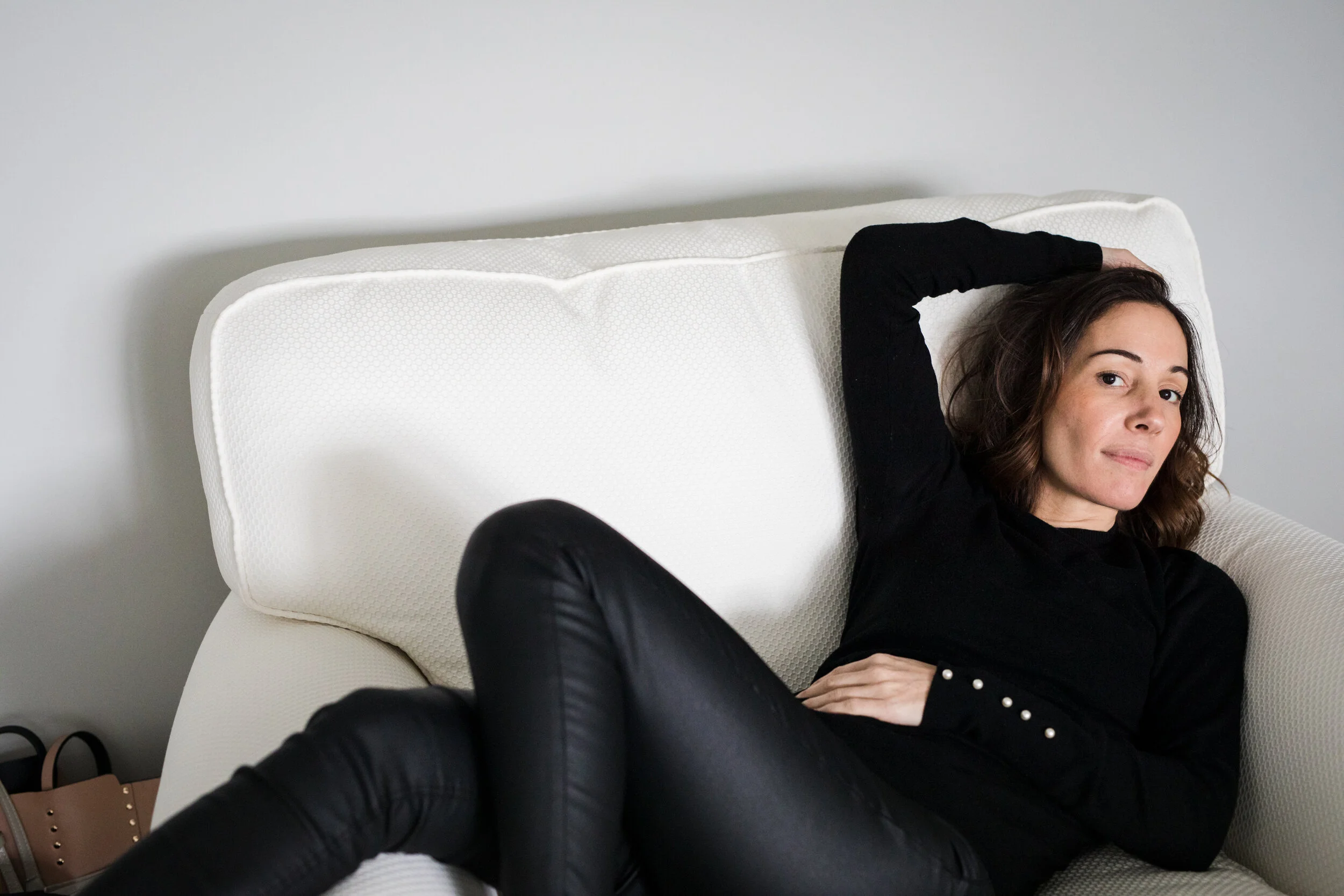
Born in Ethiopia, Eleni was amongst the countless families that escaped during the Derg Regime. At three years old, Eleni was put on an airplane with her mother and sister to find safety in an undisclosed location. Her uncle had organized their departure as he was one of the leaders who operated the covert evacuation of Ethiopian Jews, freeing them from danger by sending them to countries where they could seek refuge. Split from her other sisters and father, Eleni, along with one of her sisters and mother made their way to Montreal by way of Italy. “I remember my mother being very scared at the time,” Eleni recalls. “I was also very sick. I have this memory of me throwing up constantly in our hotel room in Italy. Then, when we arrived in Montreal, my uncle greeted us at the airport and I just remember being so curious about the snow and everything else that was just so unknown to me.” Not having known that she was Jewish prior to landing in Montreal, as practicing Judaism was quite dangerous in Addis Abeba at the time, Eleni’s family became more openly and comfortably Jewish in their way of life as they settled into the safety of their new hometown. Entering the Jewish education system, Eleni was one amongst few Ethiopians at school. “When I got to school I felt different, but I thought that was normal. I was the new kid and so I just figured that was why it felt the way it did,” Eleni explains. “But it wasn’t long before I had my first experience of discrimination. I was playing with a Fisher-Price toy and a girl looked at me and said, ‘I’m going to kill you with my egg beater.’ I didn’t understand why, but then she went on to say that she was going to kill me because I was Black.” Not fully understanding the concept of colour at the time, the idea that someone would kill her because of who she was felt viscerally unjust. “I cried hysterically. There were two girls there who defended me and so incidentally, in the same instance that I experienced violence, I also experienced compassion.” Quickly becoming cognizant that she wasn’t different simply because she was the “new kid,” Eleni learned early on that she was both Jewish and Black, and the symbiosis of that interrelationship had yet to become apparent. “I learned to navigate the school system by standing up for myself. I’m a very outspoken person, and so things shifted quickly for me socially. There was always a faint murmur at the back of my mind that sometimes I would achieve certain things at school because people were afraid of being called out for being racist, and not for merit alone. But, I’ll never really know.” That was a thought that remained throughout her school years, because regardless of how well she integrated socially, she still felt remnants of difference.   

Eleni’s Jewish identity was always a part of her due to the respect and devotion she had for her family, as well as her cultural history. However, when Eleni was young, the disconnection she had to her Black identity was starting to become a big void in the way she knew herself. “I don’t think I realized how dominant the White community was in my immediate surroundings. When I was 13 years old, I was walking along the street and I saw a Black man on my side of the street and a White man across the street. I felt scared of the Black man and so I crossed the street.” It was then that Eleni realized something had to change in her life. She was completely surrounded by a dominant White culture, and she felt she wasn’t nourishing the other half of herself. “After that incident, I knew I had to shift things around. I was so confused as to why I was more comfortable being around White people. I knew my parents wouldn’t let me switch schools, so I started volunteering and tutoring at the Black Community Centre. I was also very close to the girl who lived across the street from me since the time I moved into the neighbourhood. She was more immersed in the Black community in Montreal and brought me in. She gave me access to my soul.” Not knowing which group she belonged to, it took a long time for Eleni to find balance in her dual identity. Reconciling the two parts of herself, she found wholeness as she danced her way into her self-esteem, her self-love, herself; her indivisible identity.  

profile-projects

Amidst the growing pains of racial violence and self-discovery, Eleni was living out the trauma of yet another violation. “It started when I was around 11 years old,” Eleni explains. “My friend’s father used to molest me. It was confusing, because this was a man I loved. He was like a father figure, so why would he harm me?” Wrangling with life experiences too big for a child to make sense of, Eleni didn’t understand that this man could be someone she loved, yet hurt her even if not in an explicitly violent way. “It was an outer-body experience. I was at the age when I was just discovering my sexuality. Why when he was touching me, would my body respond even though I didn’t want it to? It added to the shame, confusion and self-blame, but it didn’t turn me into an angry kid. In some ways, I feel like I was in a privileged position, because I was able to fight through the pain of it, both mentally and emotionally.” That is how she felt throughout her adolescence, however it was when Eleni became a godmother to her friend’s little boy that it all came flowing back to the front of her mind. “I realized how much pain and trauma my body and mind had been through. I started remembering being touched as a baby, almost being kidnapped in a car by a half-naked man, and then there were other incidents of rape later in my adult life—it all started to come back to me because I saw this small child and I thought, how could anyone ever harm such an innocent thing? People have no respect for the human body. Absolutely no respect for the human spirit.” In the past, Eleni had internalized the pain so as to reduce the impact, but she was at a breaking point and knew she had to deal with it all and begin to heal. “I remember my sister was working at the hospital and she told me that my friend’s father was dying. I wrote him a letter and I don’t know if he ever read it, but it felt liberating,” Eleni explains. “Writing that letter helped me in my healing.”
profile-projects

Creating an invisible force-field around the physical body is one way to achieve detachment; one way to disconnect the body from the mind so as to dull the pain. But facing oneself, bravely finding a way to reconnect, is the beginning of dissolving that pain. Finding a way back to herself, Eleni explored all aspects of her identity from being a woman to being Ethiopian to being Jewish. Fostering a strong sense of belonging by surrounding herself with good friends and family, Eleni has been able to inch her way back into the safety of her body as well as her mind. “I am at peace with myself and with my life experiences. I know how far I’ve come and I am proud of who I am. I am happy.”

The Meaning of Loss

By Alecs Kakon

Why is it that some memories stick, change us, leave their imprint, while others leave us unscathed? Why is it that some people have a more linear approach to processing certain experiences, while others are left to work them out like an pendular math equation with no solution? Throughout my many conversations with women about everything from love and loss to trauma and vulnerability, one subject recurs with unwavering impact on how we, as women, grow and become the people we are. I often think about my relationship with my mother and the impact it has had on me and how I relate to people, how I raise my children, my values, and so on. The more women I speak to about their upbringing, the role of the mother comes up time and again, because she, the mother, is the mirror we hold to ourselves. Or, is she? A source of unconditional support and stability, the root of pain and anguish, the person we often come back to in our search for answers about ourselves, about relationships, about life, mothers play a pivotal role whether it be in strong presence or strong absence and everything in between. Chatting with Jen Fellegi we touched on all these feelings. Catching her at a “moment when it’s all coming out,” Jen has been on a deep dive into her past in her quest to learn more about herself, and in so doing, she has come to a standstill at the mystery that is her mother. What started off as pulling at one loose thread has now become a full unraveling.

When Jen’s parents first got divorced, she was only 5 years old. Having taken full custody, Jen and her sister lived full-time with their father and saw their mother every other weekend as well as once a week for a sleepover Tuesday nights (side note: in Paris, where Jen grew up, kids didn’t have school on Wednesdays). Perhaps Jen was too young at the time, or perhaps the incredible love and support her father gave her more than made up for the absence, but Jen says that she “always thought it was a great divorce, and it didn’t affect me.” Throughout her formative years, Jen was relatively unfazed by the situation. It was how it was. But she started to feel the absence a few years later when her mother was diagnosed and fighting breast cancer. “She was around more, but we didn’t know she had cancer. She hid it so well,” Jen reflects. “I remember once she leaned over and I saw an insert; her breast was gone. I asked about it and my mother said it was ‘ok’ and it was ‘no big deal’. She was protecting us from her pain.” Staying strong for her children, spending time with them and shielding them against the truth, was relatively short-lived as Jen’s mother would ultimately pass when Jen was 14.

profile-projects

Loss had become a recurring theme in Jen’s life as she felt the deep impact of having lost her mother twice, first to divorce and then to cancer. She would only come to fully comprehend the full extent of that impact later in life. “It felt like she abandoned me twice,” Jen explains. Having gone through extensive therapy as she attempts to retrace the memories of her past, it was only when Jen had her first daughter that she could grasp the full extent of that abandonment. “It’s now that I have my own kids that I feel how much I suffered from her absence,” she reveals. “Having kids allowed me to stop being mad at my mom for what felt like having abandoned me, because I see how hard it is to be a parent, but it also triggered a lot.” Wanting more than anything to move on from the pain and find peace, Jen knows that when she can finally put some of these questions to rest, it will allow her to regain her footing and better allow her to be fully present with her children, but ultimately, it would allow her to let go of the past and be present with herself.

The struggles we want to work through in life manifest in many different ways. For Jen, having spent a good stint of her photography career perfecting the mother-daughter shoot, she explains that her search to find and get to know her mother has been a guiding source of creativity and continues to drive her in her quest to find meaning. Reflecting on the void she has felt in her life, Jen says she “would just like to know her. I feel a part of me is missing, and being able to talk to her and ask her questions, I feel like it would give me peace. I remember her through the eyes of a child, so to know her as an adult would be to unlock a mystery and provide me with much needed solace.” With so much in her life to feel grateful for, Jen treads lightly as she goes deeper and deeper to understand her past as well as ensure that she learns from it rather than repeat it. “My children were my defining moment. I know I won’t repeat what my mom did, because I know my situation is different and I’m a different person.” Words she reminds herself of as she explores her fears, her angst, and even her irritation for not having worked all of this out already. Wanting so much to move past this tense moment, she is ready to feel the growth of its release.

profile-projects

Jen taught me a lot in talking about her relationship with her mother, and in turn, her relationship with herself. Our mothers play such a vital role in how we know ourselves, love ourselves, value ourselves, and so to have internalized so wholeheartedly the idea that she was abandoned, places an intense amount of pain around a woman who, in the grand scheme of things, is the first and largest mirror we have of ourselves and the world we live in. Trying to locate the source of tension, Jen is reasoning with pain and attempting to negotiate her way out of it, but perhaps the mystery that is her mother need not be solved. Perhaps her mother was simply a woman dealing with her own mental and physical illness, and Jen was unfortunately a child left in the wake of it all. Having gone on to live a life rich with love and travel, family and friends, Jen is currently pulling focus on a past memory so as to repurpose it, find new meaning, and help her on her path to self-discovery. Perhaps the peace Jen is searching for is buried deep within her. When she will finally be able to loosen the grip her mother’s memory has on her, perhaps that’s when she will emerge her new self.

Profile Photos by Amelie Boucher

The Balance Within

By Alecs Kakon

Photos by Jenni Fellegi

We have our interior being as well as our exterior self, and we live both of these experiences simultaneously. To make matters more complex, we are, for the most part, conscious of the whole process. I’ve self-scanned and traced back to my youngest memory. I can attest to a dissonance between what is felt on the inside and what is shown on the outside. I believe this to be true of all of us; as people, even the most self-actualized, we have limited awareness of our external being in relation to the world, as well as finite knowledge of how others perceive us. I was a wild, extroverted, and outspoken child. Concurrently, I was a sad, lonely, and shy person. Unlike a mirror that would portray a true reflection of my inner self, my material body unintentionally acted as a stone wall, blocking out the possibility of anyone truly knowing my internal world. Throw perception of others into the mix, and everything gets fuddled. If my life story were confined to my actions, the real me would be long-left by the wayside. That’s why I believe confidence to be a blockbuster emotion. It has this powerful connotation in society of being a true reflection of how we feel about ourselves and how we allow that self to be shown to the world. If we unpack the concept of confidence, seriously chip away at what it signifies—how we create it, how we are endowed with it, how it is related, how it is perceived—we’ll learn that confidence is sometimes a show we perform, a way of being that we practice until it resonates as true as it bridges the outer and inner self. Developing self-confidence asks that we constantly self-check, reassess, and realign. It’s an iterative process, a slow layering. Sitting down with Lauren Wise, we touched on her drive to constantly create, her entry into the public world, and the pivotal moments that made her into the person she is.

profile-projects

Lauren has long-worked in the creative field. Whether it was behind-the-scenes production, writing for various comedy acts, or the Contemporary Dance degree she earned in University, Lauren’s world has always been touched and coloured by the arts. Reminiscing about her younger years as a writer, Lauren remembers writing episodes for Dawson’s Creek: “I used to write up full episodes and send them in. I would watch the show waiting for my story to come on, but it never did. I didn’t know that it didn’t quite work that way!” Lauren did eventually catch her break as a writer, and for a while, watched celebrity names churn out her scripts. But when Lauren finally decided that writing lines for other people was no longer feeding her soul, she tapped into the elements that were missing for her. “I had no connection to my audience,” she says. “I didn’t need the recognition, but I didn’t want to feel invisible anymore.” The decision was made to throw herself into her work, and one isolating year later, Lauren emerged from her home, book in tow. Through pitches, rejections, re-writes, and finally a Del Ciotto 3-part novel later, Lauren had created something reflective of her talent as an artist, skill as a storywriter, and gift for understanding the inner-workings of relationships. With cunning wit, Swap Club, the series, was written from a deep desire to explore the creator that lives within her, and what came of it was only matched by its positive public reception. Attaining tangible success incarnated in her books, Lauren’s outer world was transformed as she became the hot topic of events, tours, and parties, but the creator within continued to struggle with confidence and how people would perceive her. “What if I’m the girl who wrote a book, and then never creates anything else?” Lauren asks. A rhetorical question every true artist is wrought with, but to Lauren, the self-doubt felt more personal. Lauren’s creative self deals with the worry that she’s told every story she has to tell, but the truth is, the mere consciousness of the limits of creation has been enough to propel her into her next big project.

profile-projects

Always constructing a narrative around the happenings of her life, from creating a daughter to creating a family, Lauren sees the world in storylines. However, we only have access to the whole story, once the moment has passed. Once it has been absorbed and processed, it can be manipulated and indexed into our memory, made sense of and given context. That is precisely what happened to Lauren when she was 30 years old and woke up from a seething migraine forcing one eye closed and her face to feel droopy. With a misdiagnosed “migraine” and a few scans later, Lauren was told that they had found something on her brain. “It was the longest seven hours, sitting and waiting to be told if it’s cancer,” Lauren remembers. “I had my 9-month-old girl at home, and all I could think of was that I might die.” Things can change in a minute, and for Lauren, the transformative instant occurred when the neurosurgeon looked at her and announced that she was going to be fine. Lauren learned that the tumour they had found was non-cancerous and that a simple, 6-minute procedure called proton radio-surgery could shrink it. “Those were the longest seven hours of my life. I realized that whatever it is I’m going to do with my life, I’m doing it. I became a ‘yes’ person.” If a moment can most accurately depict her character, this would be it. Lauren’s new outlook on life was forward-looking and this motto continues to carry her through many of life’s encounters.

Once Lauren’s life had become the subject of public judgment and scrutiny, control over how the story went was out of her hands. Should Lauren have let the possible negative side effects of successful novel impede her from stepping out of the background and onto the stage, her creative self would have remained latent inside of her. That propellant to overcome possible hardship for potential happiness and success, alongside the interminable support her husband provides, have been a recipe for Lauren to continue producing and creating whatever her mind so fancies. However, dealing with the misgivings of public perception is paralleled only by her own battle with self-consciousness. “I’m a bit of a control freak, because I suffer from a lot of anxiety,” Lauren explains. “I need to be in control and I need to micromanage everything.” Although she could have never anticipated just how successful her books were going to be, thrusting herself into the public eye merely moments after a year of utter isolation, was a complete body shock. “When I wrote my first book, I spent the entire year in isolation. When it was out, I was in the public eye. It was a stark contrast and definitely hard to navigate. When I had to market the book a lot of anxiety came out.” Lauren explains. “If I’m at a party filled with women I know, I become so self-conscious. I become aware of everything. It’s funny though, throw me into a room full of strangers and I’m the expert. I’m a lot more comfortable.” From the outside, Lauren exudes a woman in control of her fate with full confidence to manifest her dreams, but if we zipped her open, an anxious and self-proclaimed socially awkward, diffident woman would be revealed.

profile-projects

Like all of us, perception is what allows Lauren the insight as to what she sees and what people see. However, it is her capacity to interpret the outside, that rebounding self-judgment, that lets her see what other’s see of her as well as what she lets them see. It’s a convoluted process we all undertake, consciously or otherwise, however, it is only those constantly faced with public scrutiny who are forced to deal with the issue head on or be forced into hiding. Finding a balance between the two, Lauren’s resounding happiness emanates whenever she hears generous conversation about her work or even more intimately, takes inventory of the abundant love she has cultivated in her home. Lauren has overcome physical challenges as well as mental health issues; she has dealt with feelings of anonymity, as well as a constant need to create and contribute. However, social and personal misperception aside, Lauren pauses with summative self-reflection and says: “I’m flawed, I’m damaged, but I’m ultimately a very fortunate and happy person.”

Reclaiming Her Story

By Alecs Kakon

*Trigger Warning*

You can never be prepared for that moment when unwanted memories come flooding back. The effect on the body, the weight on the mind, the fog created that seems impossible to clear. It comes on seemingly out of nowhere and takes you hostage. A completely disorienting physiological and psychological experience, unresolved trauma comes on fast and strong as it unearths the ground you stand on destabilizing your world as you know it. This feeling, this murkiness, will be your reality until your conscious mind makes the active decision to participate in your recovery, take hold of those memories and try to reconstruct the path from the past to present. It’s called the healing journey, and at the end of this idyllic pilgrimage, your complete self awaits. In recent conversations with friends, this concept of “a complete person” has come up. From my own experience, I can contend that at various points in my life, I’ve picked up pieces and discarded others—behaviours, beliefs, character traits that have served me and others that have hurt me—choosing which fragments to carry and which to leave behind. Only in the last couple years, the proverbial dust has settled. The sum of all my parts—all experiences, all lessons, all feelings and memories—have amalgamated and I finally feel like a complete being. Of course I’m still figuring things out and still dealing with residual pain and issues, but I have a newfound awareness I’ve grown into, and for the first time, I can finally say that I am truly living. Sitting down with Meaghan, a part of me felt like I was listening to myself speak. I heard my words from someone else’s mouth. There were points of commonality that allowed the conversation to flow, but it wasn’t about shared experiences, it was more what wasn’t said. The thoughts that floated between us that created this safe bubble for our conversation to take place. We discussed consent, gender relations and the forging of one’s identity. We talked about the shedding of the protective tissue we wrap ourselves in, and the undeniable effects that find their way in regardless of how thick and mighty that tissue may be. But at the end of it all, Meaghan and I came full circle and unpacked the enormous task of self-acceptance, self-love and gratitude.

profile-projects

Maya Angelou once said, “There is no greater agony than bearing an untold story inside you.” Although this resonates with me on many levels, Meaghan brought new perspective to this quote I’ve been carrying around, because yet another way to experience trauma is by having someone deny your story once it’s been told. In her teenage years, Meaghan underwent a traumatic event that would set her off course for several years. “I was 17 and my boyfriend’s friends crashed my after prom. I had quite a bit to drink and passed out. When I woke up, one of his friends was having sex with me. I was drunk, which was a new feeling for me, so parts of the memory are blurry. I also blocked a lot of this out, but I remember that I didn’t shout. I didn’t fight. I think I just shut down. I tried to tell some friends what had happened, but these kinds of experiences were so normalized within my circle of friends at the time. I called my boyfriend to tell him what had happened, but he was upset with me. His friend had called him to tell him his version of what had happened. The narrative quickly shifted. My boyfriend felt that I’d cheated on him.” That became the story: Meaghan had cheated on her boyfriend with his friend. “I can honestly say that I spent nearly a decade after that trying to regain control over that narrative through all kinds of unconscious behaviours, especially with regards to my relationship to sex. There was so much guilt and so much shame and I didn’t understand what I was feeling until years later, but I remember thinking everything felt impossibly heavy and difficult for so long.”  For ten years, Meaghan felt like most of her sexual experiences – even the good and safe ones - were strangely traumatic. She wondered why.

A body always remembers. 

“When I was about 27 I remember following the Jian Ghomeshi case in the media and feeling so attached to the outcome. It was the first time I learned that there were different definitions of consent. I had always thought of terms like rape and assault in these really sensationalized ways. I had had conversations with friends about experiences that landed in some sort of grey area, but none of us felt comfortable using those terms. I started to think back. I started getting these panic attacks and started seeing a therapist for anxiety. She asked me a lot of questions that eventually led to the experience from ten years prior. She was the first person to use the word rape when talking about what had happened to me that night.” A year later, Meaghan entered into a 16-week rehabilitation program in Toronto for women who experienced residual anxiety and depression as a result of trauma in their youth, which had tremendously positive effects on her mental health and wellness. “For me, learning to believe my own version of the story was intensely healing. Like a big weight being lifted. There was so much relief; so much forgiveness for behaviours I had hated myself for. I had so much optimism about the future for the first time in so long.”

profile-projects

Upon completing the program, Meaghan – with a newfound confidence and lightness – proposed to her partner of many years. The year that followed turned into an adventure she’d never forget, and an experience that would change the shape of her life in ways she could never have expected. They decided to buy a camper van, sell all of their belongings and head out the road. “We had already been on a 5-week trip where we had a private, unofficial elopement ceremony. We loosely planned to have papers signed with our families present at some point when we could all get together, but that never ended up happening.” About 4 months into travelling in the van, her partner admitted to struggling with the lifestyle. He decided he wanted to go home to his family to regroup. “We said we would meet up again in a month’s time. I kept travelling, but when I’d reach out, he was less and less responsive. I was out in California in the middle of nowhere by myself when the camper van broke down. She scrapped the van, rented a U-Haul for her stuff, and drove toward Montreal to her family with her two little dogs curled up beside her. A last phone call made it official: her relationship was over. “It was cruel that he just left me like that, but I’m not angry. We would’ve broken up eventually anyway, and in a way I’m grateful that he disappeared. His voice doesn’t have a platform in this story. In a weird way, he gave me permission to own this story. I control this narrative. Looking back at my assault and how that aspect was stolen from me, this ending is kind of like a gift.”

Meaghan arrived back to Montreal hoping it would feel like a soft place to land, but she felt lost and untethered. All her anchor points were gone – no partner, no job, no apartment, far from her friends and the city she’d called home for the last eight years. Her dogs and her family were the only stable things that remained within her reach. “I was so shaken. At the same time, though, there was so much freedom in this blank slate. I had this opportunity to look closely at my life and decide what I wanted to do with it. I found ELMNT studio through a friend’s recommendation and through a whole lot of good timing ended up assistant managing the studio while I completed a teacher training that would allow me to return to teaching movement. That’s where I met the founders of ELMNT and so many of the people I now consider my closest friends. “A lot of people around me were so gentle with me at that time, like Meaghan’s broken, be careful. But not Natalie,” Meaghan remembers. “We were in the loft one day and I was so shy. She turned on the music and we started to sing and dance. She made me sing, and then sing louder, then louder, and then, she just made me scream. It’s exactly what I needed. She freed me from the straight jacket I had put myself in.”

profile-projects

“It’s been strange coming back to where I began after having been through all of these things. I spent so many years hiding my real self from everyone, including my family – maybe even especially my family. I had all this shame and this internalized belief that they wouldn’t like the real me, but I never really gave them a chance to show up for me as the amazing open people they are.”  As a kid, Meaghan remembers having this yearning for connection with her family, but she grew up feeling like she should suppress a lot of her feelings. “It’s funny though, because this last year and a half has been a bit of a coming out for me both literally and metaphorically. After my split with my ex, my mom came to meet me in Colorado to drive part-way back with me, it became so clear that there was a wall up between us. Being back in the same city as my family during this huge transition in my life, where it was impossible for me to really hide behind a wall because I was just so raw and open, it created this space where they could show up for me, and in turn, I got to see how amazing they are. A few months ago I met my amazing girlfriend and while I’ve known for years that I’m queer, it wasn’t something I’d ever put out there publicly because I was in a monogamous relationship with a man for so long. It just didn’t feel like information that anyone needed. Introducing her to my family, to my friends and to the world in general was my version of coming out. Now I realize that coming out is so much more than just sharing your sexual identity with the world. I’ve started being more honest about who I am in general and showing my parents who I am. The more open I am with them, the more open they are with me. I hid who I was in my teenage years, because thought I had to hold back and be how they wanted me to be. In doing that, I alienated them, but I see now that they are more open with me than I thought they would be. It all comes back to that Angelou quote about bearing an untold story inside you. Now that I’m telling my stories, I feel so free.”

All photos by Jenni Fellegi

Her Voice Within

By Alecs Kakon

In recent years, I’ve come to the realization that in the moment of a ‘fight or flight’ response, I freeze. I’m not sure when the shift happened, but I’ve grown painfully quiet over the years when it comes to speaking up and standing in my truth. I’ve led with fear and bowed out of uncomfortable situations so as to avoid conflict and anxiety. As a result, I’ve severed great friendships, stayed in toxic ones, and felt as though I had lost my voice. I could say that I didn’t speak up to spare myself potential pain, but the truth is I spared everyone, but myself. In making my external world slightly more palatable, I had turned my mind into an inhospitable place. I never thought any of this was an issue, but the more I kept my mouth shut over the years, the more I was quelling parts of myself to the detriment of my relationships both with myself and others. I learned that I fear confrontation, because standing up for myself always felt like a fight. I had never learned the skill of standing up for myself in a calm, yet assertive way. In my experience, speaking up tended to make me the target for mockery. I was invalidated or put on trial to defend myself. None of this was what I wanted to be a part of, but you’ve got to be stronger than the herd to stay on your own path. I’ve been working on my self-worth and confidence for years, and I have recently found my way over the once insurmountable brick wall. I know that in order to love myself, I have to fight for what I believe in, flee when the threat is undermining, and exercise my voice whenever possible. In sitting down with Desiree, I learned that I’m not the only one on this journey. We spoke about the language of love, feelings of being not enough, and about how she found her way to the sweet sound of her own voice.
profile-projects

Growing up in a Philipino household in Montreal, Desiree was taught very young that ambition, hard work, and financial security were indispensable values that would provide her with the foundation for a good life. Militant mother in tow, her house, although filled with love, was governed in a way that Desiree learned there was one linear path to follow, and anything else would veer her off the course to success, and by proxy, maternal acceptance. A repressive quality coloured her home as Desiree was never taught to express her emotions or commune on equal footing with her parents. Little room to explore herself, Desiree’s relationship with her mother became a site of conflict, because although she could not adequately identify her own values and beliefs, it was undeniable that they stood in contrast her mother’s. Rather than communicating through the tension, for lack of emotional reach and a vocabulary with which to support her, Desiree’s internalization of her upbringing was a reflection of her unworthiness; a feeling of not being enough. “I always thought that if I worked hard, then my mom would love me, but it never worked,” she explains. “I remember we would always have these boxes packed to send back to family in the Philippines. They would be filled with all sorts of things including chocolate, but whenever I would ask for chocolate, there wasn’t any for me to have. I just remember that feeling of not being enough, even if it’s just because of something so simple as my mom not giving me chocolate.”

Looking back, from where she stands now, Desiree has realized that the missing element to accessing herself was the constant denial of a vocal presence. Had she been able to work this stuff out in the moment and felt safe to ask questions, perhaps this feeling of not-enoughness wouldn’t have snowballed into a boulder standing between her and true self. “I remember I was 8 years old and was at my neighbour’s house waiting for my parents to come home from work. The father made a sarcastic remark that got me very upset and defensive. I ran home. He felt awful and wrote me a letter apologizing for his behaviour. I remember reading the card and feeling uncomfortably weird. I cried so much and I didn’t understand why. I think I just wanted that kind of connection with my own mother.” At the time, Desiree left those feelings unexplored. It had become easier to push everything into a deep, dark box, and trudge along through life blindly, but eventually it all caught up with her.

profile-projects

At 23 years old, Desiree met the man she would eventually marry. A hardworking, ambitious man who provided her with financial stability, Desiree hitched her wagon to his horse, so to speak, and together built an empire. His empire. “He went into the club business and I helped run the place from behind the scenes,” she explains. “At one point, all my insecurities started to catch up with me. I started becoming a very angry person, so angry that my co-workers would call my angry alter ego, Deserita,” she laughs reflectively. After two rounds of IVF treatments, a few clubs in, a young daughter, and a relationship that had been reduced to conflict, Desiree found out that her husband had cheated on her. The marriage began to drift and by 35, they were divorced. “I was awakened to the fact that I expressed myself through anger, but I also learned that my anger was a manifestation of my pain. I realized my emotions were stunted because I had disconnected my mind from my body. After my divorce, I could have gone many ways, but I went inward.”

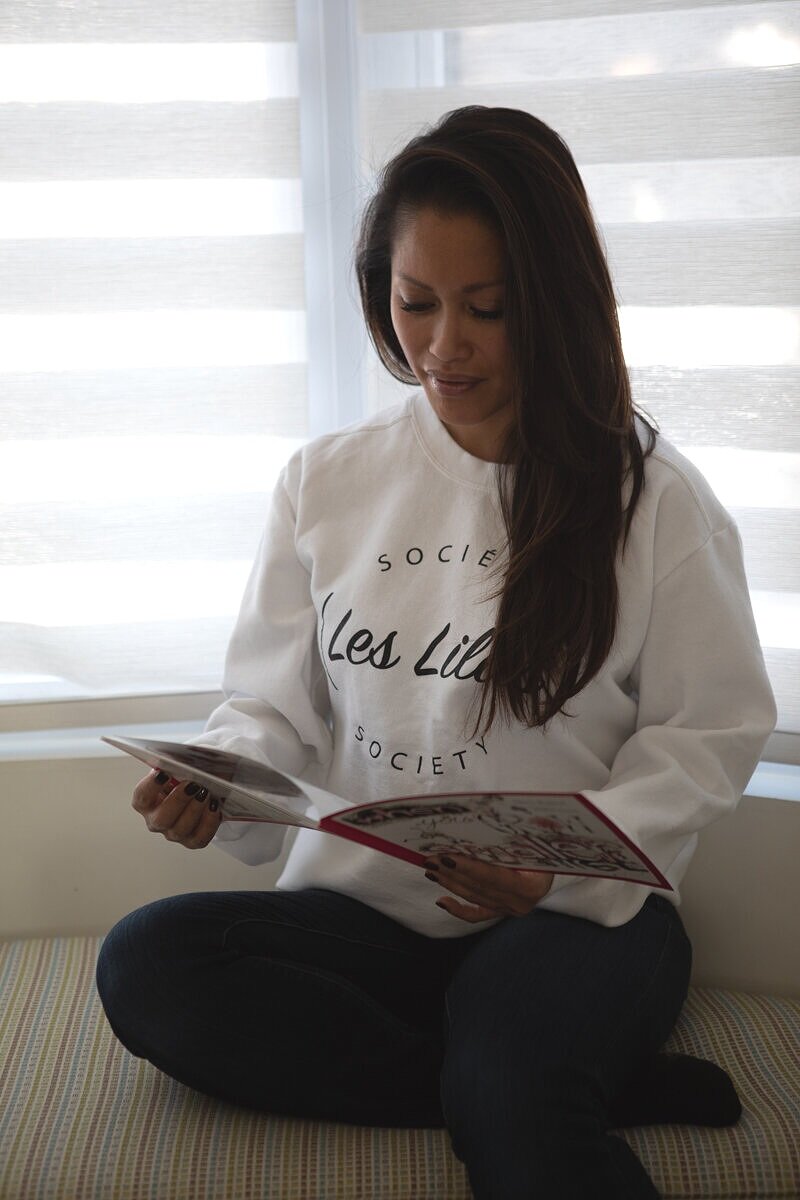
Desiree hit reset on her life. Faced with the existential question ‘who am I?’ Desiree was left with absolutely no response. “I knew I had to figure it out. I wanted to let go of all the anger, because I wanted to be present for my daughter.” With therapy, good friends, and immeasurable time spent introspecting, Desiree unpacked the impact her upbringing had on her and found a positive light with which to brighten her past. “We have different love languages. When I think back to my mom, she was doing the best she could given her context. This helps me revisit my past with a new lens.” Knowing she wanted to spread the wealth of her newfound knowledge, Desiree created Les Lilas Society with her friend Joëlle. “It’s a storytelling community where women convene to share their stories. We’ve recently created the same format but men only, called Les Monarques. It started because I needed to find something for myself. I wanted to give back to others, to help them feel empowered by standing in their truth. I was over the small talk, I wanted to get deep; something nourishing,” Desiree explains. “The first time I shared my story it was raw and it was so hard, and it still is, but rather than feeling alone and sad, crying in my room, I found my voice and connected to people around me.” Desiree has learned to identify her values, which has filled her life with happiness and purpose. But more importantly, she has learned to stand in her truth and shares it with the world.

profile-projects

After checking in with herself, and taking inventory of past events, slowly unfolding what everything meant and how it all amalgamated into the person she had become, Desiree had ironed it all out. Despite her father’s kindness and a common-sense knowledge that her mother loved her, Desiree pinpointed that her anger was the internalized materialization of never feeling enough, never feeling heard. Her spirit felt the ominous oppression of duty and conventional success, never clearing the way for exploration, self-discovery, and self-awareness. But, as she started taking control over the space in which her mind, body and spirit reside, she has been able to look beyond the little girl that lives within to give rise to her mother’s childhood, allowing context to emerge and forgiveness to abound. Desiree brims with self-reflection, abundant emotional perception, and holds a microphone to her voice (metaphorically and literally) more often than she ever thought she would do. Her dictionary for self-expression has opened a floodgate for a life filled with generosity, love, and a strong sense of giving back.

All photos by Jenni Fellegi

A Flicker in the Dark

By Alecs Kakon

To recognize the poetry of our lives is to endow each moment with meaning. Just as the age-old adage claims that everything happens for a reason, it is with this framework that we look at life and build the narrative. We read that each experience was written purposefully, each symbol replete with significance and each theme uncovers something deeper. Punctuated by disorienting falls, we watch as our hero rises; each painful blow a testament to her strength of character. With an introspective look at my own life, I can see where the story begins, how I would organize my chapters, what the overarching themes are, and who the main characters would be. By fleshing out the most impactful moments of my life, I attenuate the pain and uncover the joy and vindication it paved way for. Because with each retrospective articulation, a deeper understanding can be drawn. As I write my story, I constellate my identity. Certain memories come speeding to mind, shaping my personhood; like photographs of immutable time, they’ve been telling my story all along. Sitting down with Cathy, we talked about the cycles of life, the source of her inner strength, and the importance of perspective.

profile-projects

Cathy grew up most of her life the daughter of a single mother. When she was two years old, her parents split. Then at four, her mother remarried, but six years later, her step-father went on a “business trip,” and never came back. It was the early 70s and her mother had to make her way into the workforce so as to provide for her 3 children. “My mom all of a sudden had to become a career woman,” Cathy explained. “My brothers and I became total latchkey kids. My mom would always prep meals and take care of us, but we had to do our part. We had chores and responsibilities and did more than just pitch in. People would say that we came from a broken home, because back then, that’s how you referred to kids from divorced families, but my home was never broken. We had a lot of fun and my mom was a rock star. She was my mother and my father, and we were all very happy.” Watching her mother have to go out and develop a new side of herself was a foreshadow to Cathy’s impending future.

profile-projects

When Cathy was 23, she married – about 15 years later, and three sons in, she was divorced. “Our marriage was very nice for many years, but my ex was very sick. He was mentally ill and toward the end, I couldn’t take care of him anymore.” The last three years of her marriage were coloured by deception and theft, escalating to a point where she could no longer carry on. Cathy stood by him through mental hospitals and electroshock therapy, but when she eventually learned that he had been taking money from friends and family, she knew that she couldn’t do it anymore. “If I stood by him, I would lose my friends and family, all the people who were important to me, and it came to a point where they were all more important to me than he was. I couldn’t lose them,” Cathy explains. In a wave of repetition, Cathy left the luxury of lunches and day-time tennis, for a full-time job. “It was the best thing that ever happened to me. I was forced to go out and develop a part of me I had no idea existed. I didn’t know I could do half of what I’m capable of and that is a gift I’m grateful for.” But, before the light cast its light, there was the darkness.

One evening, Cathy went to drop off her children at her ex’s house. “There was an incident,” Cathy describes. “I went to drop off the kids and words were had. He hit me, he threw me up against the car, he ripped my coat. It was a big scene and my kids saw it all. I went straight to the police. I was shaking, I remember I threw up, and then I went back to his house with the police, who then threw him in jail for the night.” With the herculean strength of her inner mama bear, Cathy thrust aside her trauma and pain and shifted focus on protecting her children. “He hurt me, but that didn’t matter. He hurt me in front of my children and that was horrible.” Sitting in sadness and anger was not an option: “You get one day to cry, then you get up and move on,” her mother had explained to her. Three children in tow, Cathy absorbed that lesson entirely. Although she was able to rebuild and put it all behind her quite successfully, the visual memories of the time have been irrevocably imprinted. Like snapshots that capture the past, traumatic experiences transform into images, sensations, smells and triggers. More vivid than the mirage of memory, the visual or phantom image floats through our minds as it seers into our memories. “I can still see the tunnel I used to picture. It was a very scary, dark tunnel with just the faintest flicker at the end. I didn’t think I could reach it. But it eventually got brighter. I can remember that visual, it stands out to me as something I go back to. It reminds me that I got through a very dark time. It gives me strength.”

JFEL3641.jpg

Speaking in aphorismic manner, Cathy peppers her past with a spirited “from bad, comes something good, you just have to be patient and willing to recognize it. For example, had that horrible evening never occurred, then I wouldn’t have gotten full decision-making rights for my boys. That’s something I am forever grateful for.” The truth is, although that is a matter of half-glass full perspective, Cathy has lived through enough hardship to know that no matter how bad things get, she can rely on her inner strength to carry her through. Organizing her life in logical sequence, the themes of Cathy’s life emerge, but despite the obvious motifs that umbrella her story, what has undeniably manifested is a force to be reckoned with. “I was once told that I am a woman of substance, and you know, you can complement a woman on her beauty or her humour, but to be told that I am a woman of substance, well that means that I am surrounded by people who bring it out in me and can truly see me for who I am.”

All photos by Jenni Fellegi

A Journey Inward

By Alecs Kakon

What can be said about a young woman of 37 years of age who uses her boundless capacity for introspection and self-care to open a space within and around herself to create positive change and honest communication? On an inward journey to learning how to better understand how to live her best life, Natalie contends that taking stock of past moments provides her with a platform to better her present. Taking pause to give gratitude and enjoy quiet moments of reflection, Natalie showed me how a few significant events in her life informed her character. She noticed that by choosing to see the positive in some of the harder moments of her life she has actively continued to contribute to her own growth.    

One thing that was apparent about Natalie within a few short minutes of talking to her is that she doesn’t have a conventional way of thinking. Not adhering to traditional ways of being, Natalie forged a life for herself outside of the expectations heaped upon her. Knowing that she had a more bohemian approach to life, at the age of 31, Natalie took an assessment of her life and decided that she didn’t want what everyone around her had; children, a house, and that proverbial white picket fence. It just wasn’t her modus operandi. Instead, she wanted to be part of something distinct, leave a different impact on the world. So she packed it up and moved to Berlin. Natalie spent 2 years living and working in the old European city, taking some time to self-reflect and figure things out. She hadn’t realized prior to her travels just how much she would’ve missed her family, but that wasn’t reason enough to move back. If she were to return, she wanted to plant roots and build a career for herself. Already quite entrenched in the yoga and wellness world, she discovered a deep affinity for spinning while abroad, and so, within a few years, Natalie, along with 2 partners, opened up ELMNT studio in her hometown.

Steady and settled in Montreal, Natalie explains the relationship between yoga and spinning and how the two types of movement have a symbiotic dynamic: yoga stimulates self-discovery and introspection, while spinning is a more outgoing energy promoting vitality, both, however, are powerful actions that move in and out of the body and mind. Understanding this yin and yang relationship on a deep level, Natalie explains that she has always had that same duality within her; an ability to be charged in multiple directions depending on the perspective she so chooses. Explaining the positive effects as well as the drawbacks of this chameleon-like aspect of her character, Natalie remembers the precise instant in her life that produced this balance within her.

profile-project

Seeing the world as a place of infinite possibility, Natalie’s thirst for self-improvement often takes her deep into her past, a place she dives into to find the lessons she needs to understand and live a better today. A process of holding on and letting go, Natalie remembers being 9 years old and losing her grandmother, and 3 years later, losing her grandfather. An impactful event in her life, not only because she loved her maternal grandparents, and felt their love in a truly unconditional way, but also because the loss rocked her world inalterably. Describing her childhood as stable and rooted in tradition, anchored by her grandparents’ home and the routine they established, Natalie explains that in their passing, “everything started to fall apart.” Her fear for losing a loved one spawned her fear of attachment, as she goes on to say, “why give love to one thing if when it’s gone, everything is gone?”

Feeling a deep connection to someone who passes can have meaning beyond our comprehension, informing our character and attitude toward relationships and love in ways we might not understand. For Natalie, losing her grandparents represented losing stability, tradition, and naturally, family. The after effects of their passing left a deep imprint of fear of getting too close. However, rather than seeing her trepidation of attaching to one single person as a negative, Natalie retrospectively explores the meaning of attachment and explains that she connects to everyone in some way and by spreading her bond and affection, she is free to love bountifully. ‘Loss, much like change, creates a certain unpredictability, however, that tension creates space, and from that space,” Natalie explains, “growth occurs.” Natalie looks back and remembers being the unconventional girl living what some would call a “crazy life”. However, she can pinpoint the precise moment of losing both of her grandparents as the event that caused that space to open; her locus of true growth. Natalie is beginning to understand what it truly means to love and lose. Loss is not the moment when someone passes, but rather the abandonment of learning from the people around us and understanding the impact they have on each of our lives.

profile-project

Finding room in her life to feel all the feels, Natalie is a free spirit who enjoys moving in and out of every emotion that brews inside of her. Anger allows her to learn from conflict, change allows for growth, and learning not to react to the many triggers around her, allows her to become the graceful woman she is working toward becoming. As a studio co-owner and self-care practitioner, she believes in creating a safe space for open and honest communication in her community. Surrounding herself with inspirational people, Natalie always had a steadfast conviction of impacting the world in a great way. Today, she has built a community of happiness and support at ELMNT, her wellness studio; a place where she, together with her partner and team of mindful teachers, have come together to bridge art and fitness as well as create a safe space for open and honest communication with the ultimate objective of locating and unleashing the truth that lives within all of us.

All photos by Jen Fellegi

More About the Project

It all started the summer of 2018. I was sitting around with a girlfriend discussing how cool it would be to have a coffee table book with beautiful portraits – both written and photographed — on the subject of ordinary women. When I say ordinary, I mean any woman, every woman. I wanted to interview these women and find out a little something deeper about them, something I wouldn’t learn from simply mingling at a party or staying on script in a conventional way. I wanted something more raw. I would compile their stories and people would leaf through and hopefully connect with a stranger based off their profile.

profile-projects

September of 2018 I decided to just have a go at it. I started by interviewing friends and family. I tested out my interview skills, honed my profile writing craft and just had fun with it. No business plan, no goal or overall end objective, just writing for writing’s sake. But, it didn’t take long for “fun” to become something a lot more meaningful.

Each woman I interviewed had a lot to say. Each supposed “ordinary” woman was extraordinary in her own way. Each life, so humbly described, was its own world. I unearthed so much in the short hour I spent with each woman – we bonded, we connected, and I learned that I have something in common with every single stranger, whether it was a belief, a similar experience, or something completely arbitrary. I learned so much. I learned that I was searching for the meaning of happiness, I learned that I needed more insight into how the nuclear family works, into the significance of the role of the mother, and so on. I also became intimately familiar with the fact that people just want to feel heard and seen; have someone to talk to and connect with.

Then it would come time to sit alone with my notes and that blinking line on my blank computer document. The work was tremendous. How would I reflect each woman’s story back to her, honour her words, her life, her feelings? How can I stay tightly connected to her point of view without imposing any of my own?

There are incalculable ways of interpreting a story. But, listening to a person, hearing her point of view, suspending judgment, well, it’s harder than it may seem, but I cultivated the skill and it simply opened my mind to the infinite ways in which a person’s life and breath can shift something as miniscule as a metaphorical comma.

profile-projects

I’ve been working as a copywriter for well over a decade. On one job site, I met a wonderful photographer with whom I had to work for social media purposes. We got to talking. It should be disclaimed that I never chased a story – I never looked for someone with a sensational life so that I could document it. I always interviewed any and every woman I met, because, that was the only rule I gave myself – ordinary women… every woman. And, as I’ve always known, and this project confirmed, we all have a story. And so did Jenn.

profile-projects

We met for coffee, we interviewed, we cried, we connected. And just like that, we had a collaboration. She would capture the public person, the external being, the woman in her natural habitat. Photograph the woman as she is known to her friends, family, co-workers. She would provide the other half of the woman – and together, the holistic essence of each woman would be conveyed. Jenn completed this project in a way that allowed for another level of authenticity. On a deeper, parallel level, she also manifested a new layer of possibilities that emerged from the process: a friendship.  

All photos for this entry by @sewze

About the Author

The basic principle of sharing is that the more you share, the less you own. You partition off what was once whole. In terms of sharing information about yourself, the same principle applies. By sharing our stories, our secrets, we divide and fraction off bits of ourselves. The reason this is significant is because I once held onto “my” story. It was mine. Belonged to me and no one else. I lived my life in this way for many years, safeguarding my story, burying it deep inside of me, drawing on it whenever I needed to protect myself, using it to create boundaries, alienating and isolating myself from others because of it, and so on. It was only recently, I believe around the time I had my first child, that a seed was planted inside of me that it was time to let this story grow outside of me rather than stay rooted within. I slowly began to share my story. The more I shared the words out loud, the less a part of me they were. The more I heard myself speak my truth, the more people my story branched out into - the more I connected with others as they shared their stories. All of a sudden, I wasn’t the only one with my story. Others shared my story. I belonged less to my story and my story belonged less to me. Incidentally, I started to build a community of people that helped dissipate the weight of my story and so began my journey toward healing.

profiles

I’ve written about my childhood in many formats. Poetry, fiction, opaque prose, and so on. But I had never written the truth in plain words. In words that didn’t need a dictionary to decode. In 2017, I embarked on my first year as a PhD student. I searched everywhere for a topic that would resonate with me. Try as I may to sink my teeth into a topic like Gothic women and the reader’s response, the real topic was within me, and no tiptoeing around it would stop it from eventually hitting me in the face. I couldn’t deny it nor avoid it. It was staring me in the eye—every article I read, every book I was assigned—one theme emerged: sexual violence against women and the symptoms that emerge in the aftermath. I started sharing this information with friends and yet again, found that all of the symptoms that were lightly coded in narrative symbols were ubiquitous across all members of my new community. We all lived different iterations of the same trauma, yet the symptoms that manifested were all found in the same story. One word came up time and again: disembodied. To not be in your body. This was huge because it explained everything, and although it requires pages upon pages to unpack, disembodiment basically says it all.

As I worked through my trauma, my studies took new shape. I wrote multiple articles on rape narratives and their likeness to a sort of metaphorical colonization. Once I exhausted that topic, I moved onto rape narratives and the modalities of silence—dissecting each form of silence from submission to resistance. Once again, I squeezed the life out of that subject, but something shifted inside of me. The healing had begun. By simply reading, writing, talking and learning about the various forms of silence that oppress victims of sexual violence, I slowly started to feel liberated from the silence that once subsumed me. I closed the chapter on that topic and moved along. I am now at the phase of my own therapy that aims to understand healing structures and ultimately, I hope to create new operational healing systems that unknowingly I had been implementing in my own life through My Profile Projects.

I had embarked on a series of interviews without a clear goal. I wanted a chance to sit with women, one on one, and get to know them by asking questions I normally don’t ask in everyday conversation. So much came to light with even some of my closest friends, because when dialogue, as we know it, is suspended, and people get a chance to talk without interruption, well it kind of sounds like I’m describing a therapy session and the truth is, that’s kind of what it felt like. However, although I was on the receiving end of these monologic conversations, I was the one being treated, because I was the one who found my words.

profiles

I lived a life filled with a lot of pain, deep, traumatic pain. The traces are still visible, but they are slowly taking on new form. As a wrote each of these profiles, I slowly saw my PhD topic emerge: Narrative Therapy in Stories of Sexual Violence. Creating a healing system that is somewhat tangible, somewhat possible, and completely operational in an applicable form. Write your story. Simple. Write what you need to say, write what you need to hear, write through the pain.

Within every one of these women’s story, something happened inside of me – I found my story and it is composed of these women’s stories, because from their honesty, vulnerability and openness, I have found my voice. The silence has lifted and I am ready to speak. 

JFEL0741.jpg

Over the next year, you’ll read the stories of 52 women told through my perspective. It’s a gradual unfolding - I hope you enjoy the origami of it all.

— Alecs

All photos by Jenni Fellegi